In a nutshell
- The Vancouver Harbour Flight Centre sits at water level by the sea wall, below the Olympic Cauldron, walkable from most of downtown.
- Harbour Air also flies from the airport, and that is a different service. This booking is the downtown harbour terminal at both ends.
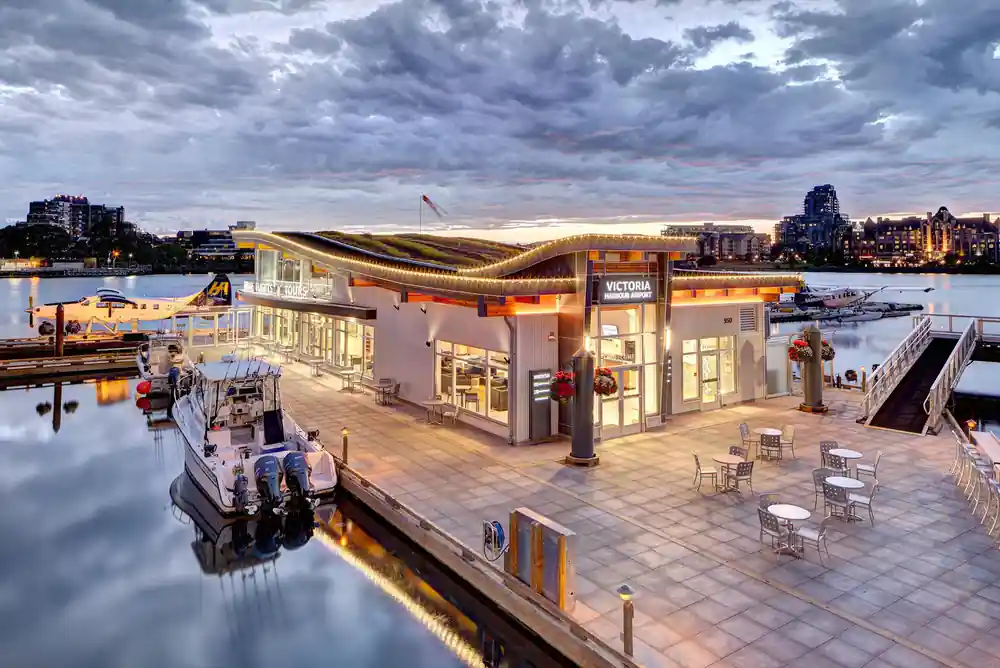
- Victoria's Inner Harbour is not near the centre, it is the centre. You step off onto a dock by the Parliament Buildings.
- The reason the day works is that neither end needs a taxi, a train or a bus. That is where a conventional flight loses its time.
The distinction that decides everything
Harbour Air operates from more than one place in Vancouver, and the difference matters more than the name suggests. There is a terminal at the international airport, and there is the Vancouver Harbour Flight Centre downtown. Both fly to Victoria. They are not the same journey.
This booking uses the downtown harbour terminal, at 1055 Canada Place. That address is worth writing down, because a visitor who reads seaplane and assumes airport will spend an hour travelling in the wrong direction.
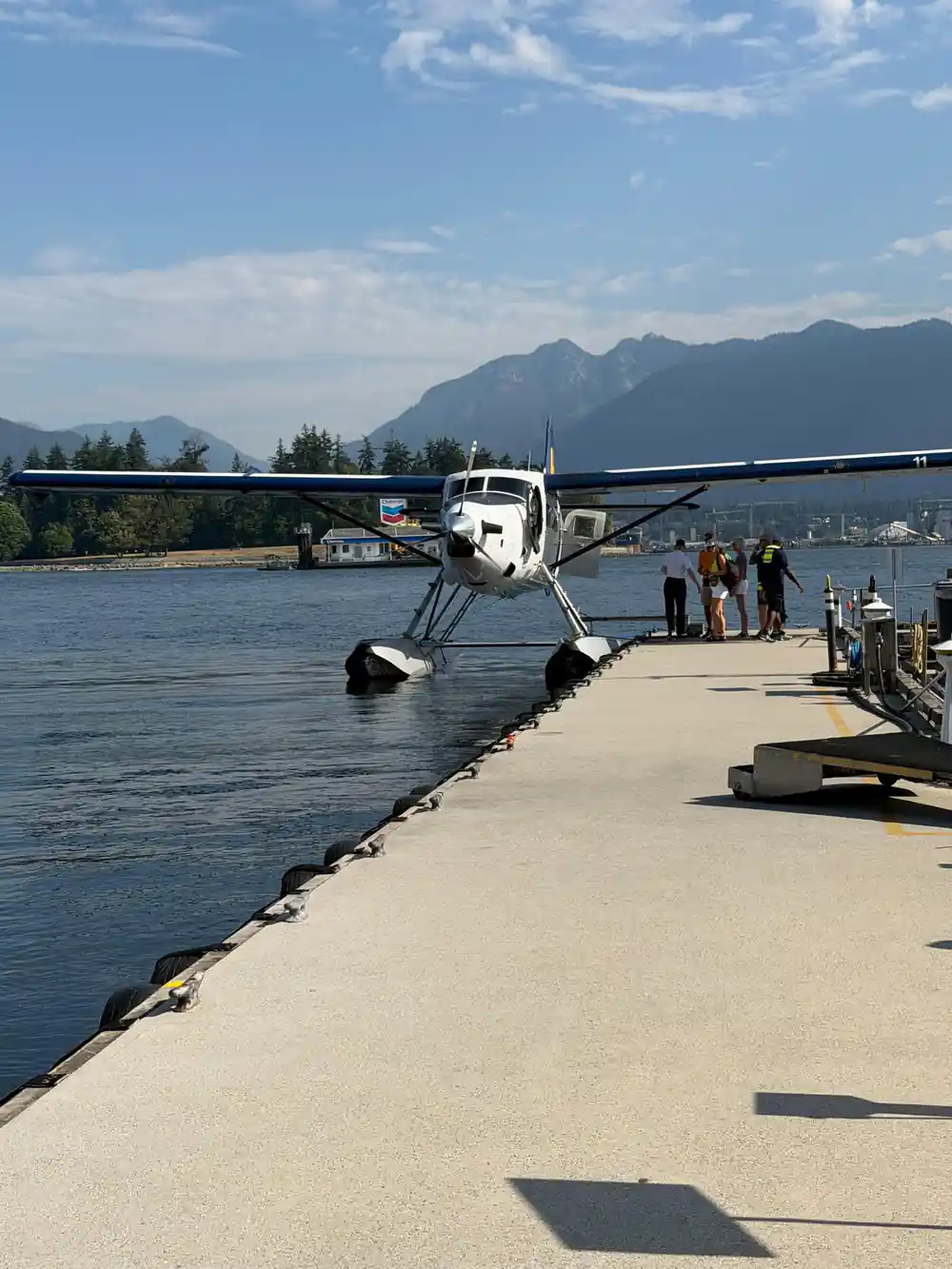
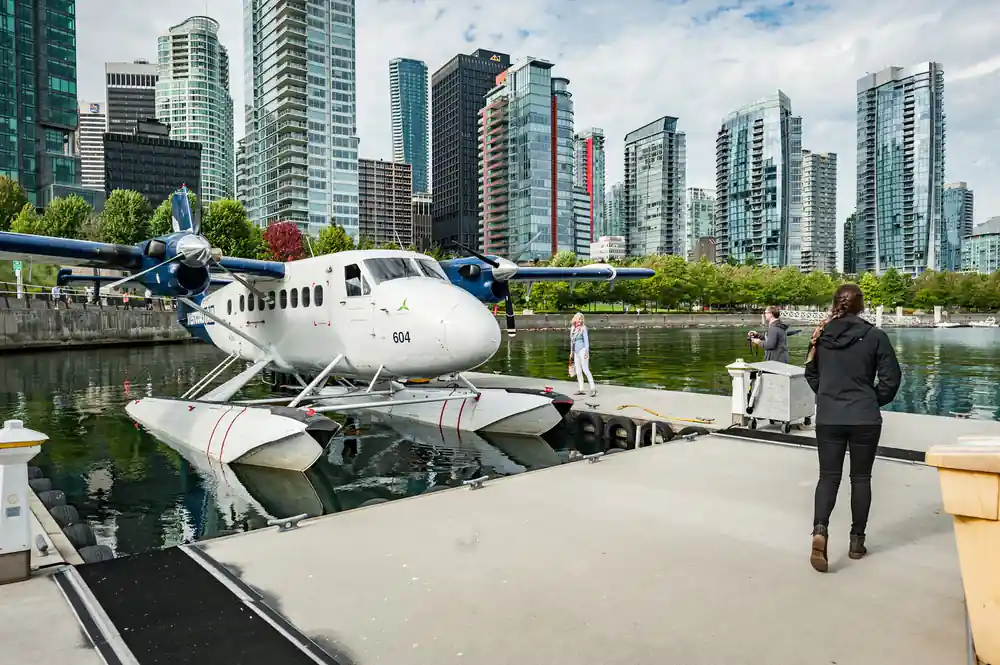
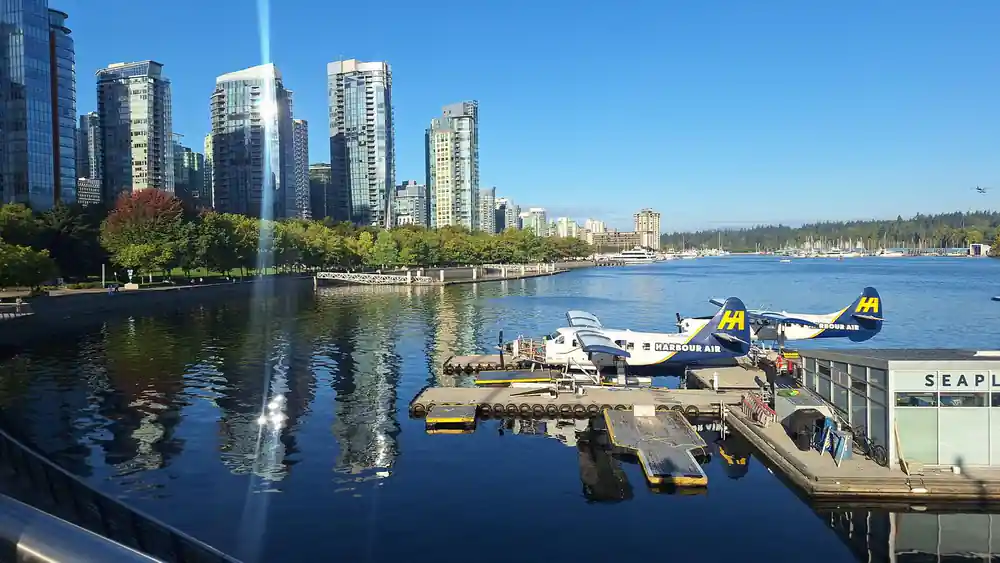
The terminal is at water level, by the sea wall, below the Olympic Cauldron, next to the cruise ship berths at Canada Place. For anybody staying in downtown Vancouver it is a walk rather than a journey.
What the terminal is actually like
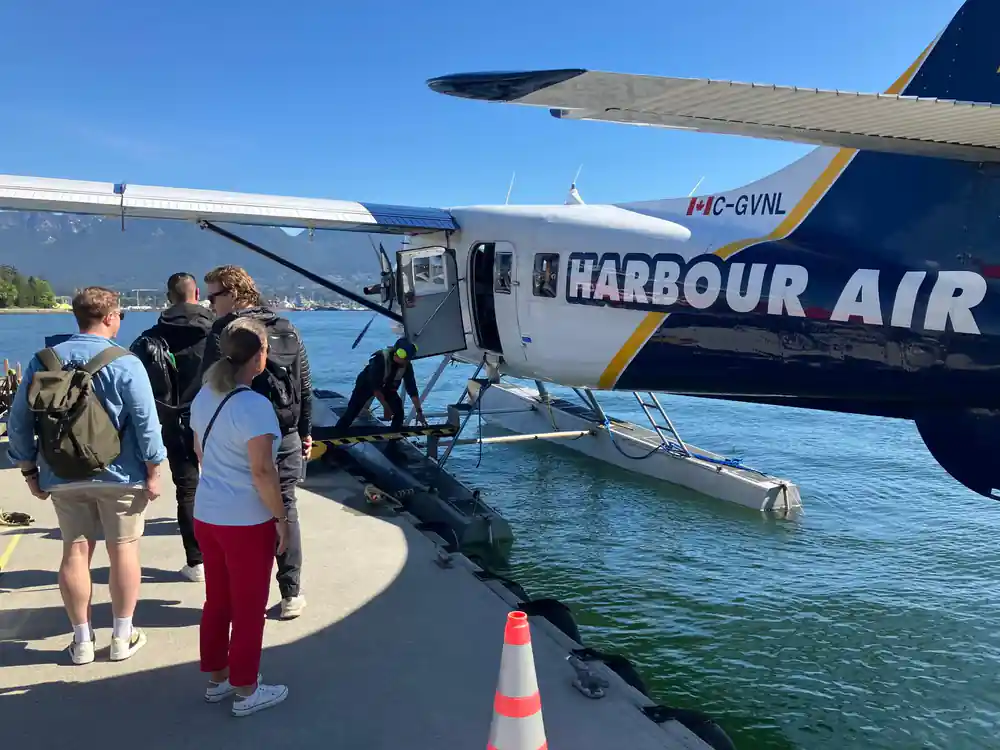
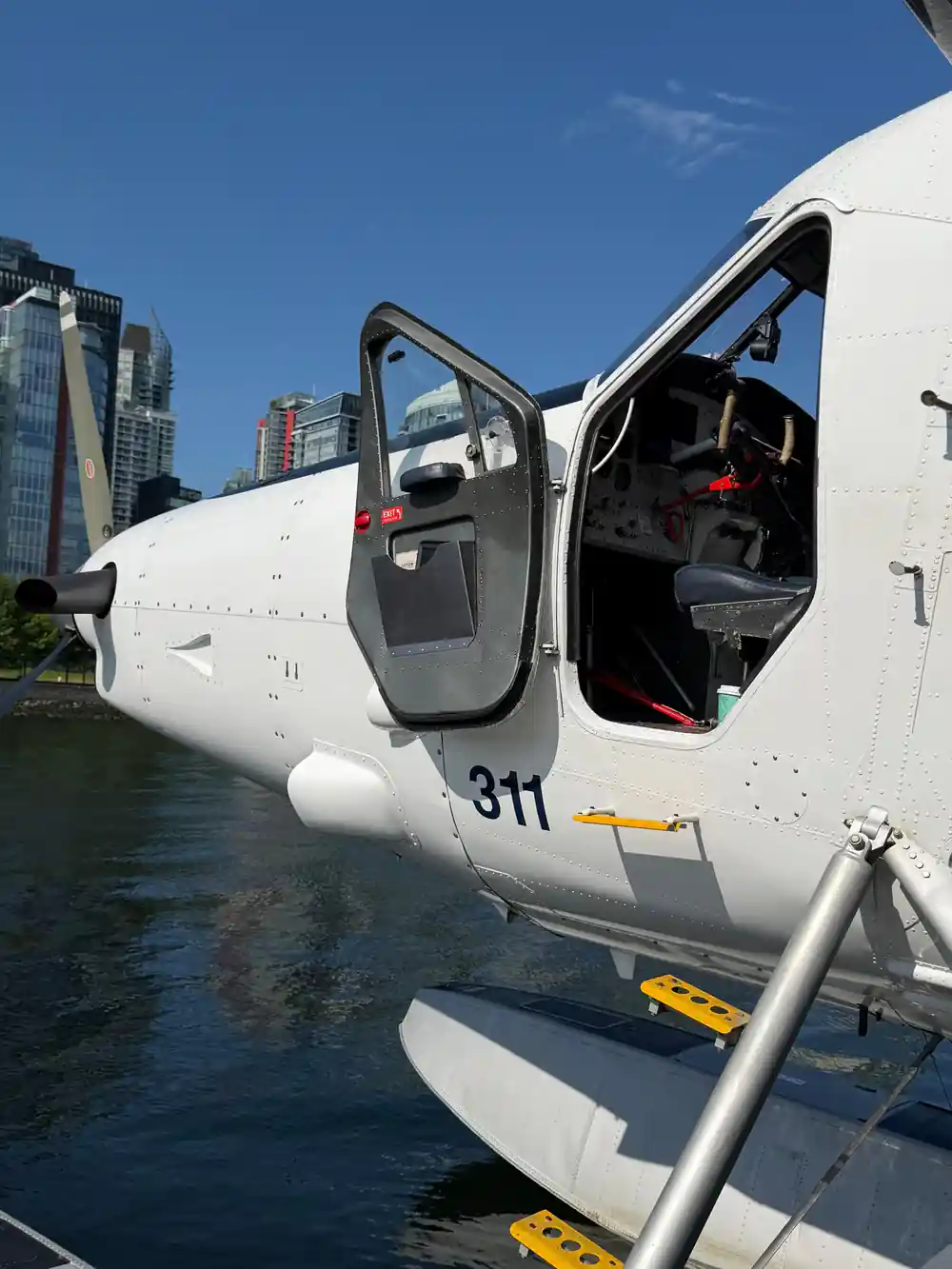
Small. There is a check-in counter, a scale for bags, a waiting area with a view of the dock, and a door to a ramp. The whole building would fit inside a single gate lounge at a major airport, and the walk from the counter to the aircraft is a matter of metres.
There is no security screening in the airport sense. Identification is checked at the counter, bags are weighed, and that is the process. This is the single biggest reason a thirty-five minute flight can genuinely take about an hour of your day rather than four.
It also means the forty minute check-in cutoff is realistic rather than optimistic. At a major airport a forty minute cutoff would be a joke; here it is generous, and people who arrive on the hour still get coffee before boarding.
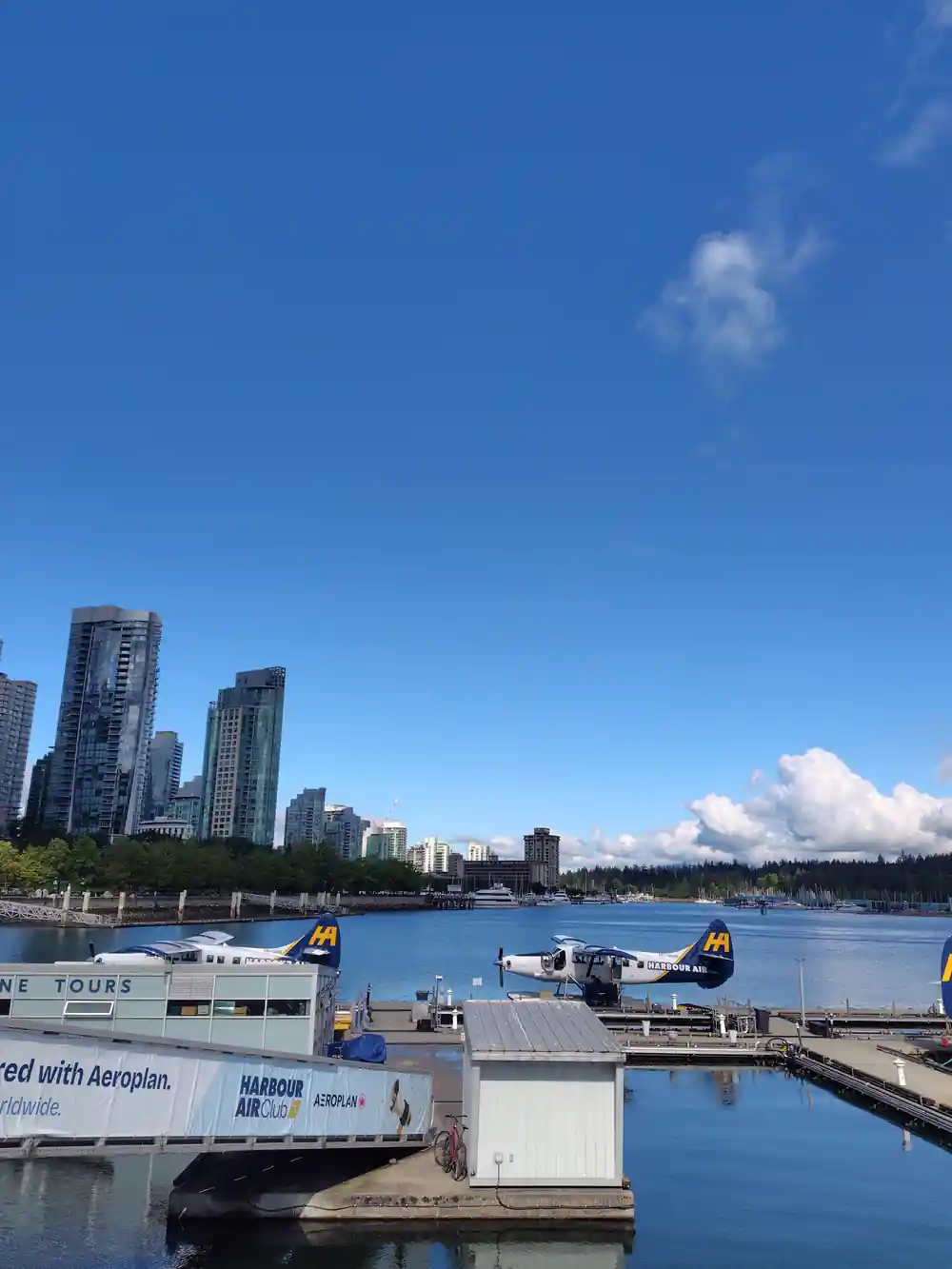
The dock at water level, with the city directly above it
Arriving in Victoria's Inner Harbour
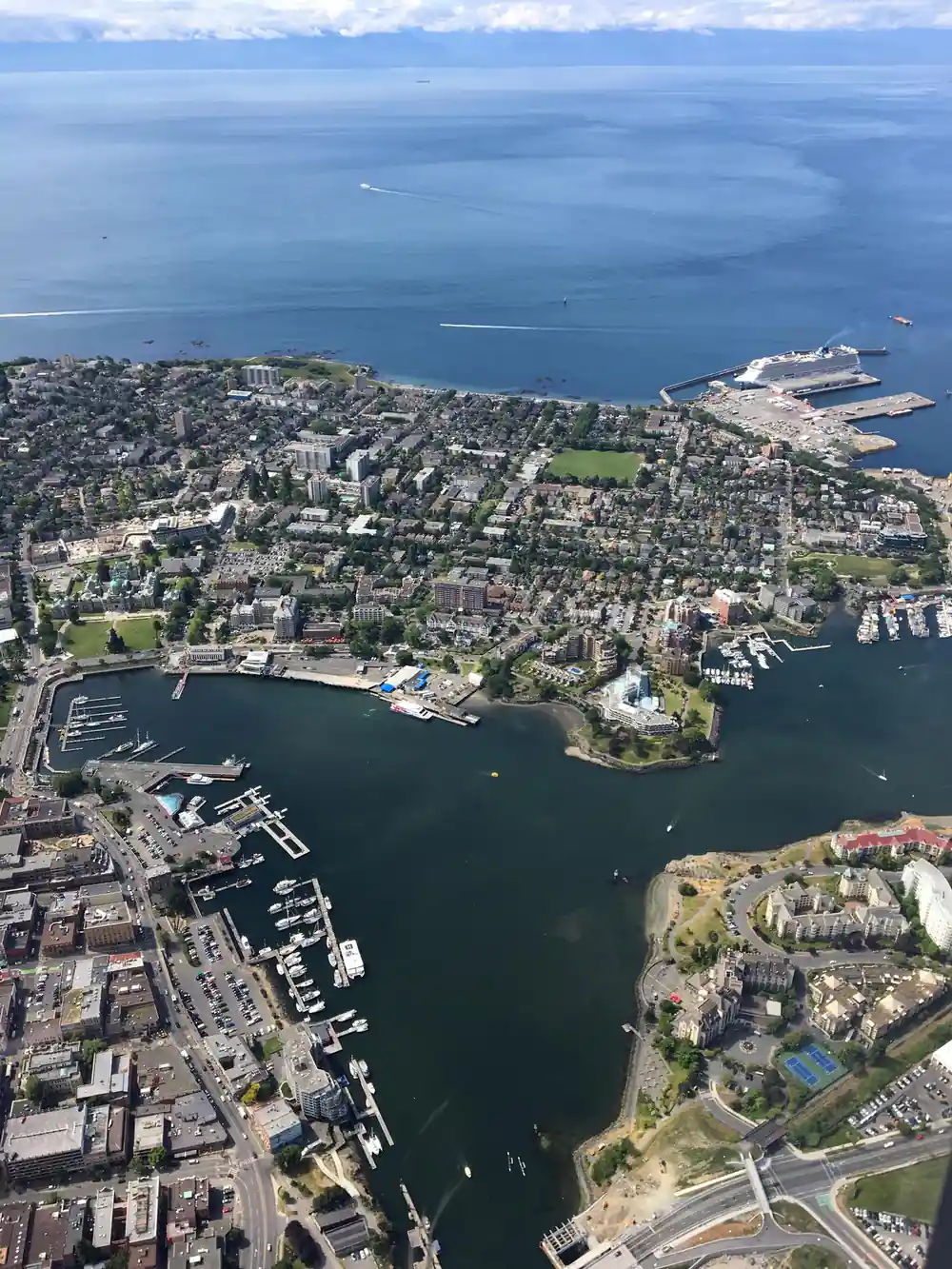
The Victoria end is the better half of the argument. Victoria has an airport, and it is out of town, and getting from it into the city takes a while. The Inner Harbour is the city: a basin surrounded by the Parliament Buildings, the Empress hotel, the causeway and the streets behind them.
The aircraft taxis to a dock in that basin and you walk up a ramp into the middle of everything. Whatever you came to Victoria for is almost certainly within walking distance of the spot where you step off the float.
This is the part that regular users of the route talk about, and it is why the service exists as commuter transport rather than as a novelty. Somebody flying over for a meeting can be in an office twenty minutes after the floats touch the water.
Where the time actually goes
Compare the two versions honestly. A conventional flight is perhaps twenty-five minutes in the air, plus getting to Vancouver International, plus check-in and security, plus boarding, plus getting from Victoria's airport into town. The flying is a small fraction of the elapsed time.
The harbour service is thirty-five minutes in the air, plus a forty minute check-in, plus a walk at each end. There is no transfer to build in because there is nothing to transfer to: you start downtown and you finish downtown.
That is the whole proposition, and it is worth stating plainly because the flight time alone does not explain it. The service is not meaningfully faster in the air than a conventional one. What it removes is almost everything that is not air.
Getting to Canada Place
If you are staying in downtown Vancouver, walk. Canada Place is on the waterfront at the north edge of the downtown peninsula and most central hotels are ten to twenty minutes away on foot along flat ground.
If you are further out, the SkyTrain reaches Waterfront station, which is beside Canada Place, and taxis know the address. Give the driver the flight centre rather than Canada Place itself, because the cruise terminal is a large building and the seaplane dock is below it at water level.
Allow more time than the map suggests if a cruise ship is in. The area around Canada Place on a turnaround day is busy in a way that surprises people, with coaches, taxis and several thousand passengers moving through the same few hundred metres.
One thing to plan for at the end
The return does not bring you back to Canada Place. The coach from the ferry finishes at Pacific Central Station, which is on the other side of downtown near Chinatown and the SkyTrain.
That is not a problem, it is simply a different place from where you started, and it catches people who assumed a round trip means a circle. If you left a bag at a hotel near the flight centre, you will be walking or riding back across town to collect it.
Worth five minutes of thought before you book and none at all afterwards. Pacific Central is on the SkyTrain, so getting back across town is straightforward once you know that is where the day ends.
Why this route exists at all
Vancouver and Victoria are close together and separated by water, which is the exact situation floatplanes were invented for. The strait is too wide to bridge and the ferry terminals sit well outside both cities, so the surface journey is long even though the distance is short.
A harbour service solves that by using the one piece of infrastructure both cities already have in the middle of them: the water. No land is needed, no runway, no approach path over housing, and the terminal can sit on a downtown waterfront where nothing else could.
It is a very British Columbian answer to a very British Columbian problem, and it is why the corridor has been flown continuously for decades rather than being a novelty someone launched recently.
Downtown dock to downtown dock, no transfers either end
from US$305Reserve now & pay later