In a nutshell
- There is no bridge and no tunnel. Every option involves either flying over the Strait of Georgia or going across it on a ship.
- BC Ferries sails from Tsawwassen and Swartz Bay, both a long way outside their cities. That is where the surface journey loses its time.
- Seaplane, the ferry with coach connections, helicopter, or a conventional flight through both airports. Each buys a different thing.
- It flies out and returns by coach and ferry, which is the arrangement that gives you the most usable hours in Victoria.
Why this is harder than the map suggests
On a map Vancouver and Victoria look close, and they are: roughly a hundred kilometres apart. The complication is that Victoria is on Vancouver Island and there is no fixed link. Every journey between them crosses the Strait of Georgia by air or by sea.
The second complication is where the crossings happen. The main ferry route runs from Tsawwassen, south of Vancouver near the American border, to Swartz Bay, north of Victoria. Neither terminal is in the city it serves, and getting to and from them is most of the journey.
So the honest framing is not how long the crossing takes. It is how long the whole thing takes from the middle of one city to the middle of the other, which is where the options genuinely differ.
The ferry, with coach connections
The BC Ferries Connector runs coaches from downtown Vancouver to Tsawwassen, across on the ferry, and on to downtown Victoria, as one ticket. It is comfortable, reliable, scenic and the arrangement most people use.
The crossing itself is about an hour and a half and threads through the Gulf Islands, which makes it one of the better scheduled ferry journeys anywhere rather than something to endure. The coach legs at either end are around an hour each.
The whole journey runs to roughly three and a half to four hours city to city. That is a long time to spend travelling if you only have a day, and it is a genuinely good way to spend an afternoon if you have the time.
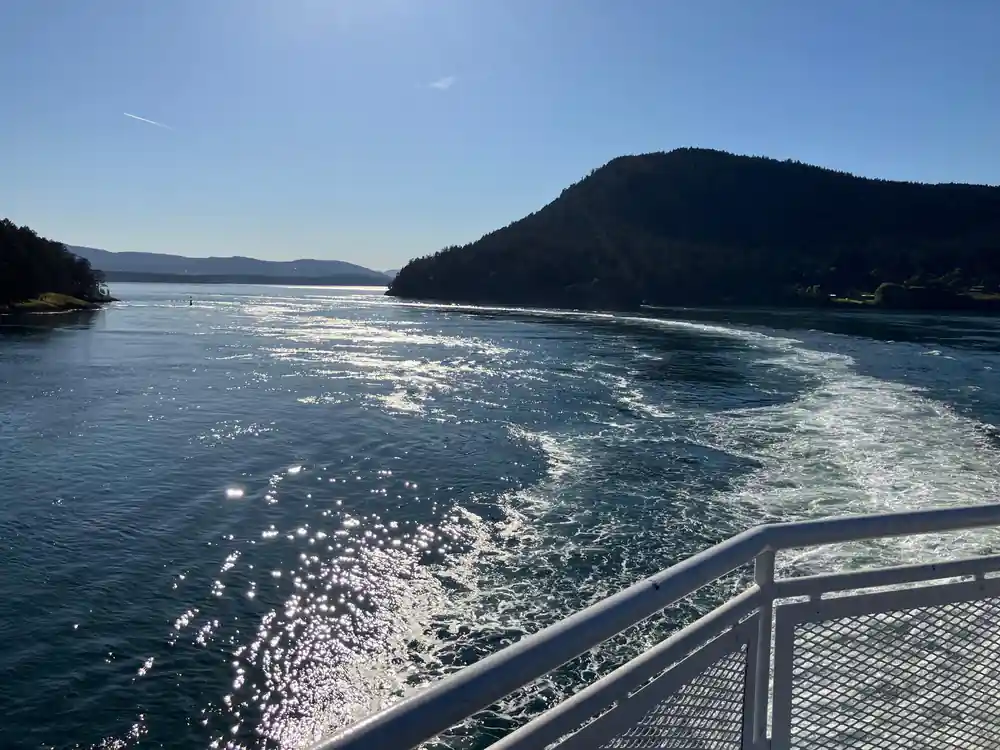
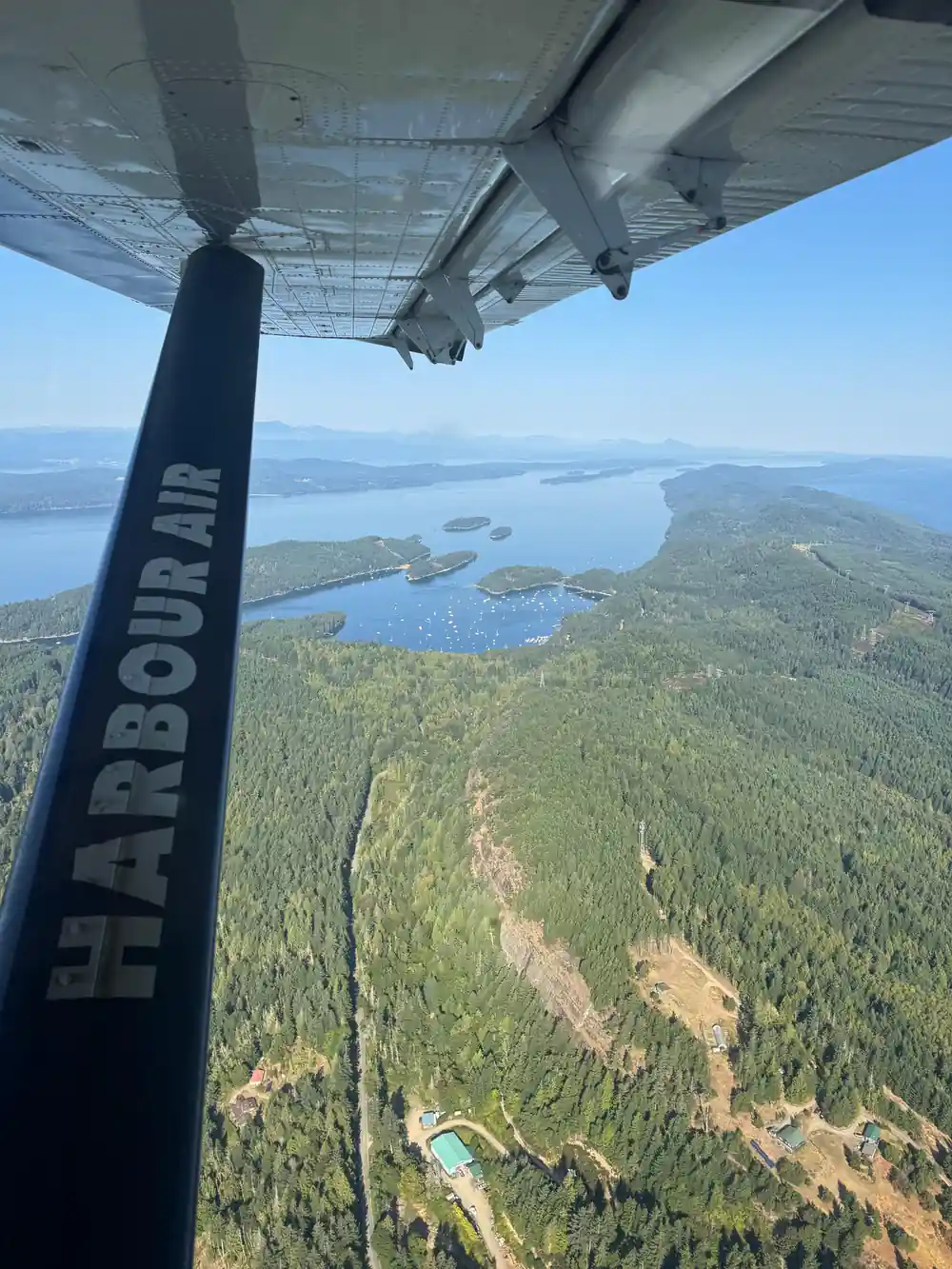
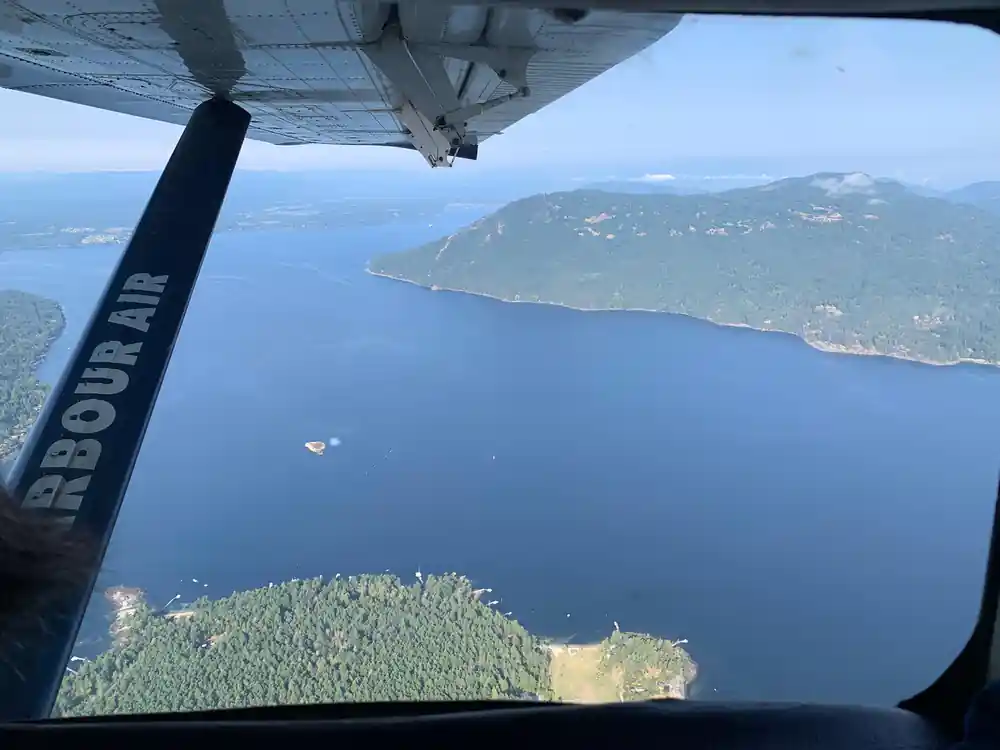
The strait from the air, with no bridge anywhere in it
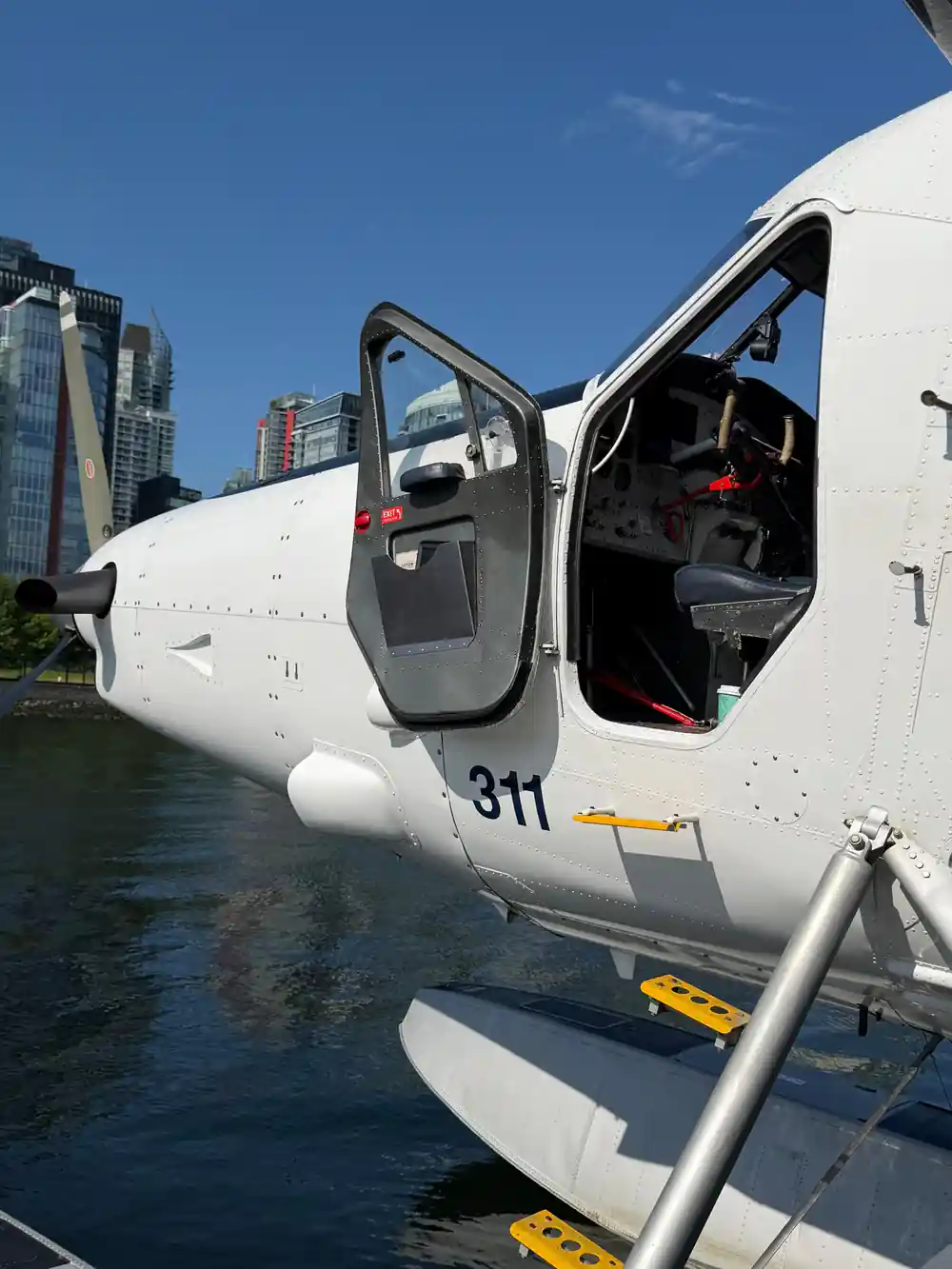
The seaplane
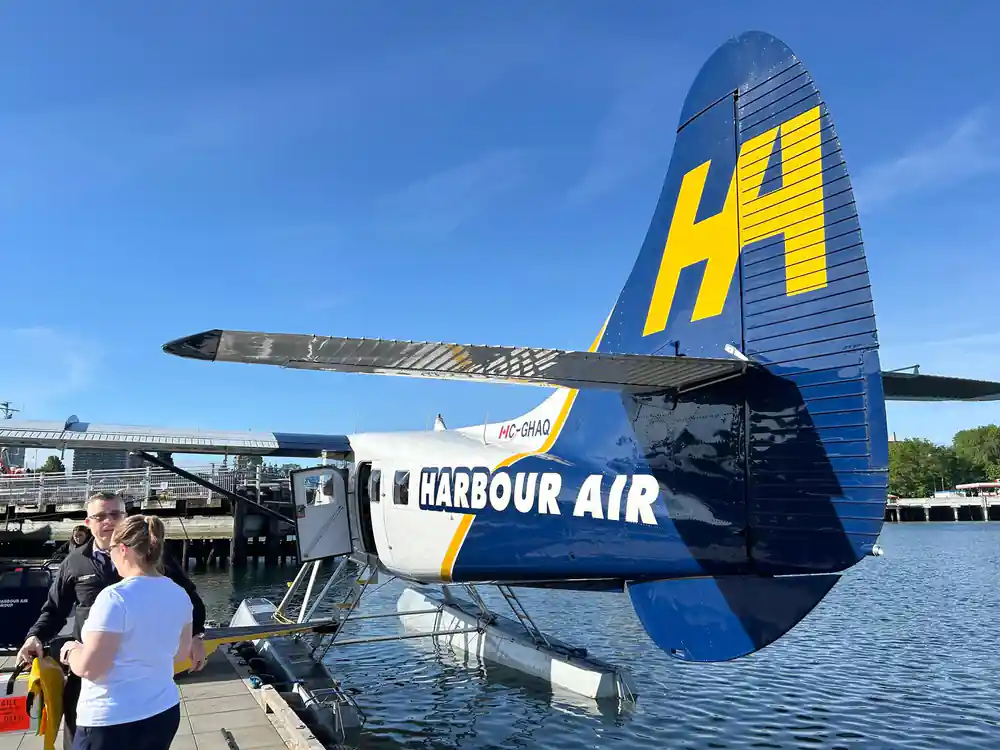
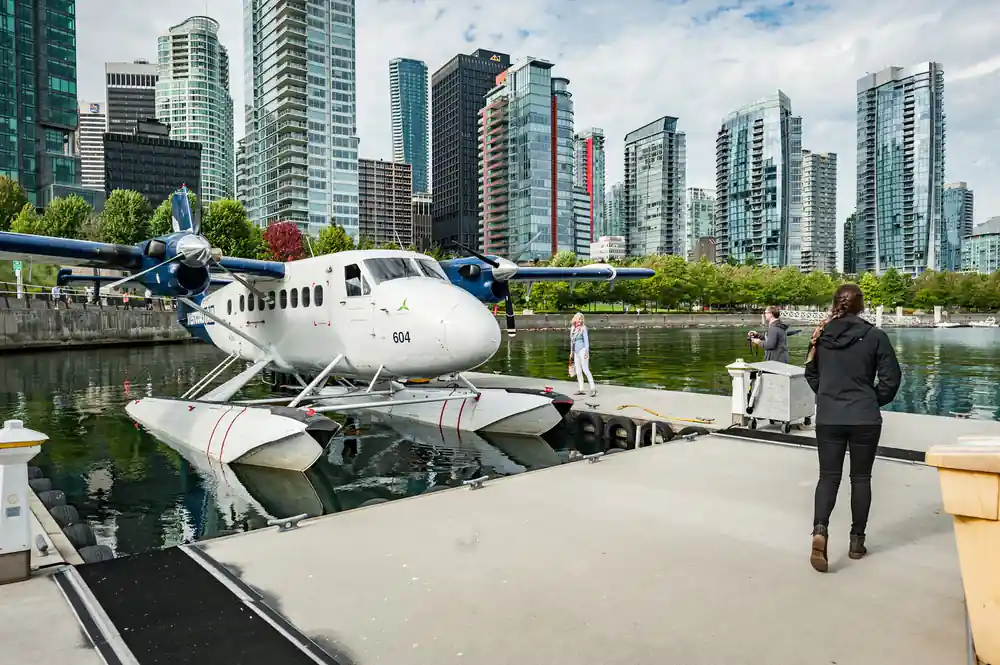
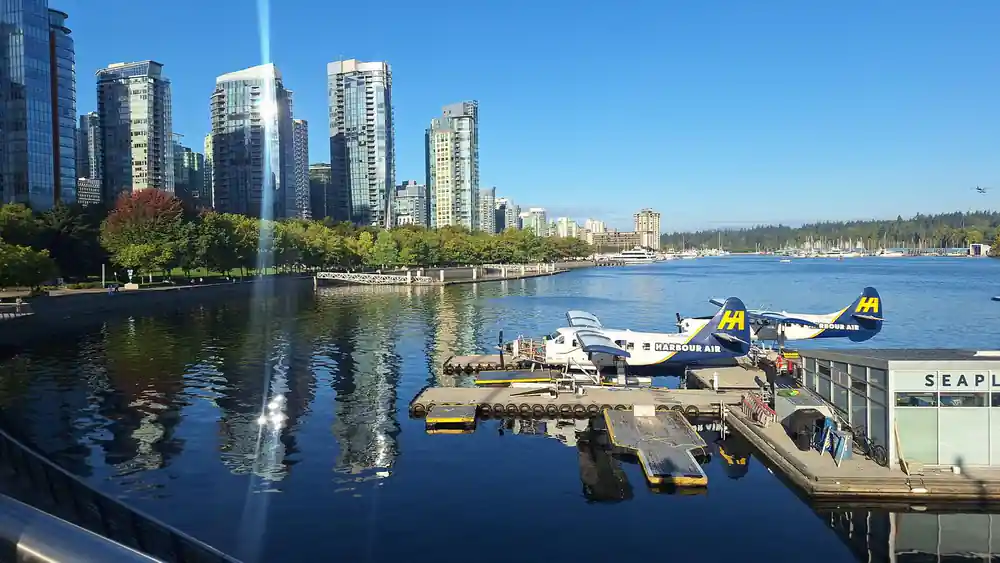
Thirty-five minutes in the air from a dock in downtown Vancouver to a dock in downtown Victoria, with a forty minute check-in and a walk at either end. City centre to city centre in about an hour and a half, most of which is not flying.
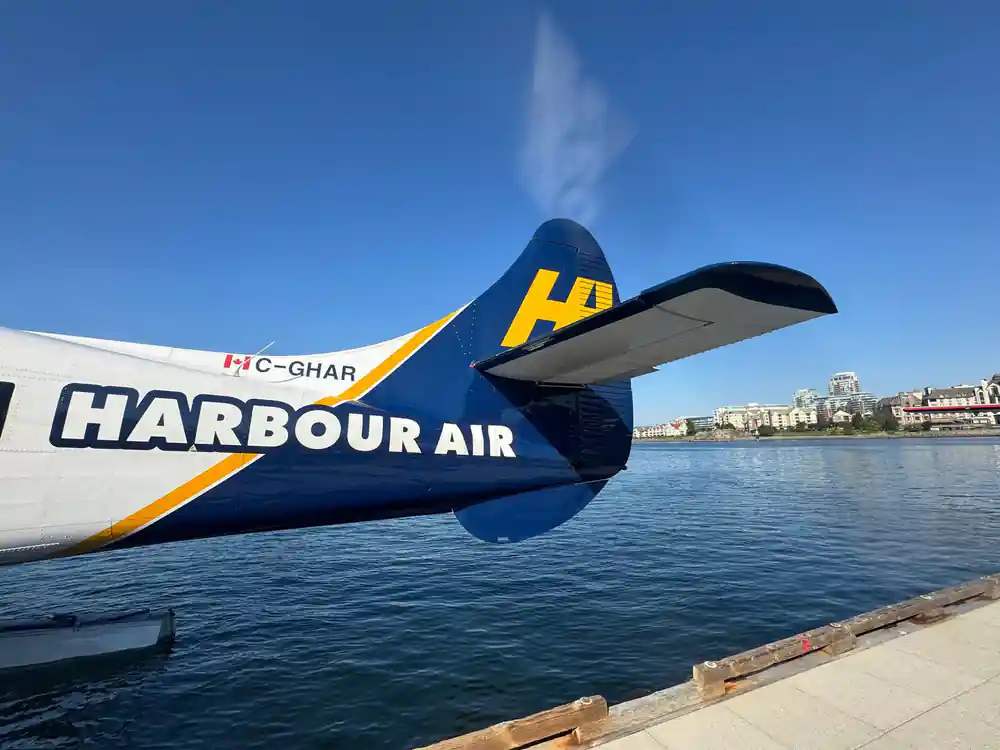
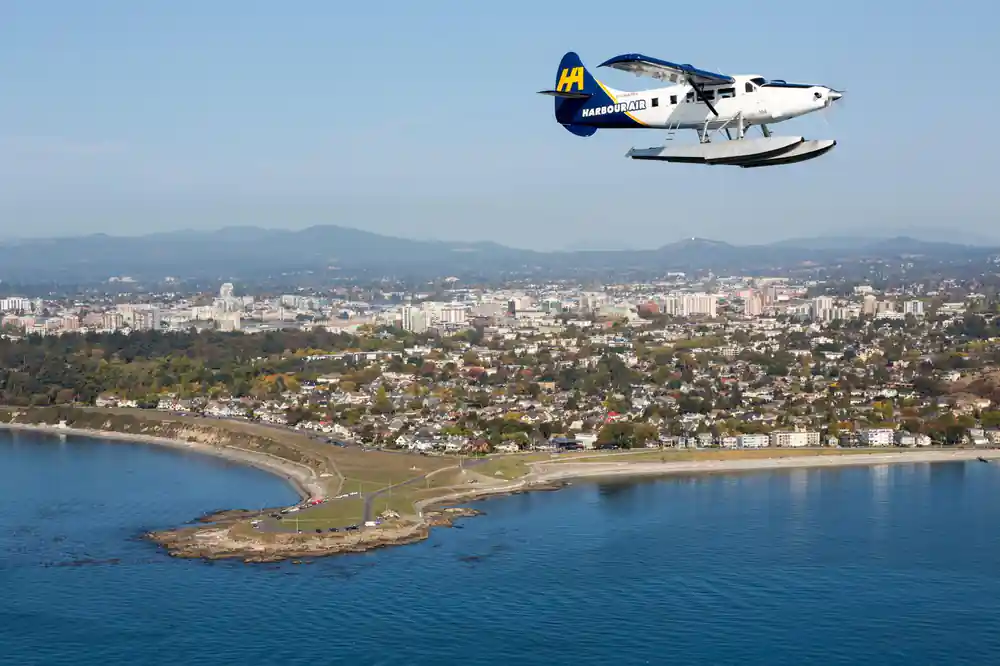
It works because it removes the terminals. There is no journey to an airport, no security queue, no journey from an airport at the far end. The aircraft lands in the Inner Harbour and you walk into Victoria.
The constraints are an eleven kilogram baggage allowance, a small cabin, and genuine exposure to weather. It is the fastest option by a wide margin and the one most affected by fog.
Helicopter and conventional flight
A scheduled helicopter service also links the two downtowns and is comparable to the seaplane in journey shape: fast, central, weather-sensitive and limited on baggage. It is a legitimate alternative and behaves much the same way in a day plan.
A conventional flight through Vancouver International and Victoria International is the option that looks fastest on paper and is usually slowest in practice. The air time is short, and everything wrapped around it is not: two airport journeys, check-in and security.
For a day trip between two walkable downtowns, the airports are the wrong tool for the job. They come into their own only if you are connecting to a longer flight and need to be airside anyway.
Why this trip does one of each
The arrangement on this booking is a seaplane out and the Connector back, and the logic is about where the hours land. Flying out puts you in Victoria in the middle of the morning with the whole useful part of the day ahead of you.
Coming back overland spends the evening travelling, which is the time of day when travelling takes least from you. You are not missing anything in Victoria at seven in the evening, and the ferry through the islands at that hour is better than at nine in the morning.
Doing it the other way round, ferry out and fly back, works and gives you fewer usable hours on the island. Doing both legs by ferry gives you a long day with a short middle. Doing both by air is the version where you never go through the islands at all.
If you are staying on rather than returning
A day trip and a one-way transfer are different problems. If Victoria is your destination rather than an outing, what you want is a single ticket in one direction with no return leg attached, and both the ferry connector and the airlines sell exactly that without any of the round-trip machinery.
This booking is not that. It is a round trip by design, ending back in Vancouver at Pacific Central Station the same evening, and the two legs cannot be separated or sold apart from one another.
The other thing that changes when you are staying on is luggage. The seaplane's eleven kilograms is generous for a day out and restrictive for a move, which pushes anybody with suitcases towards the ferry.
Booking any of it without a car
None of these options need one, and in fact a car makes several of them worse: taking a vehicle on the ferry is dearer, requires arriving much earlier, and is useless in a compact city where everything is walkable from the harbour.
Victoria in particular rewards arriving on foot. The Inner Harbour, the museum, Chinatown and the older streets are all within a short walk of each other, and the seaplane dock sits in the middle of them.
Book ahead in summer for any of it. These are busy corridors in July and August, and the seaplane in particular flies small aircraft with finite seats that sell out on good-weather days.
Fast out, scenic back, no car at any point
from US$305Reserve now & pay later