In a nutshell
- Dock to dock. The taxi out and the landing are part of it, so the time genuinely airborne is a little under that.
- The aircraft moves out into the harbour like a boat, accelerates, and the floats unstick. It is the part nobody is prepared for.
- A floatplane cruises far below airline altitude, so the ground is detailed rather than distant. It is noisier than a jet and everybody has a window.
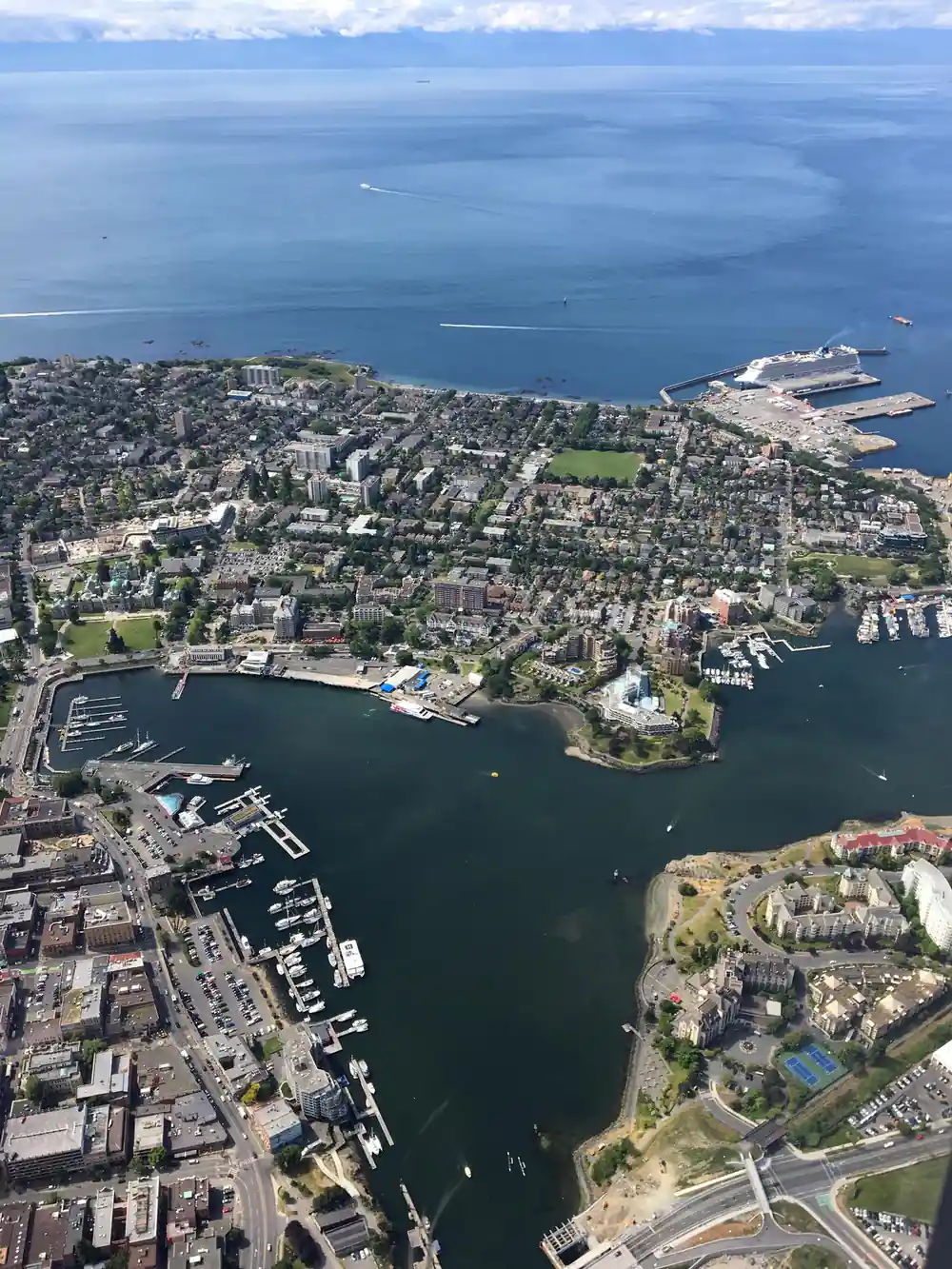
- The approach comes down into Victoria's Inner Harbour, with the Parliament Buildings on the waterfront as you touch down.
Boarding, which is nothing like an airport
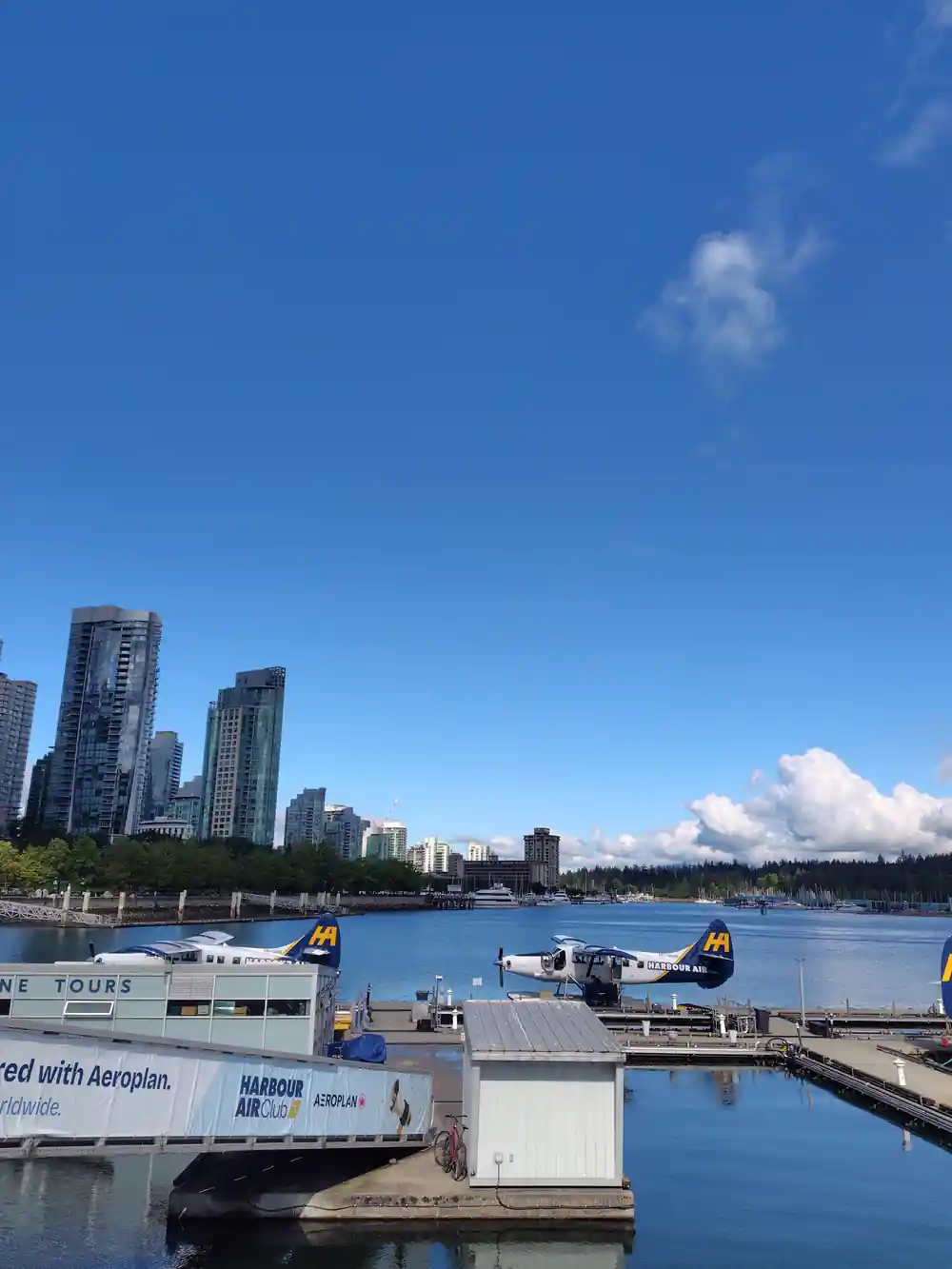
You check in at a counter, hand over your bag to be weighed, and wait in a small lounge with a view of the dock. There is no security screening in the airport sense, no departure gates and no announcements you cannot hear. The whole building is smaller than most airline lounges.
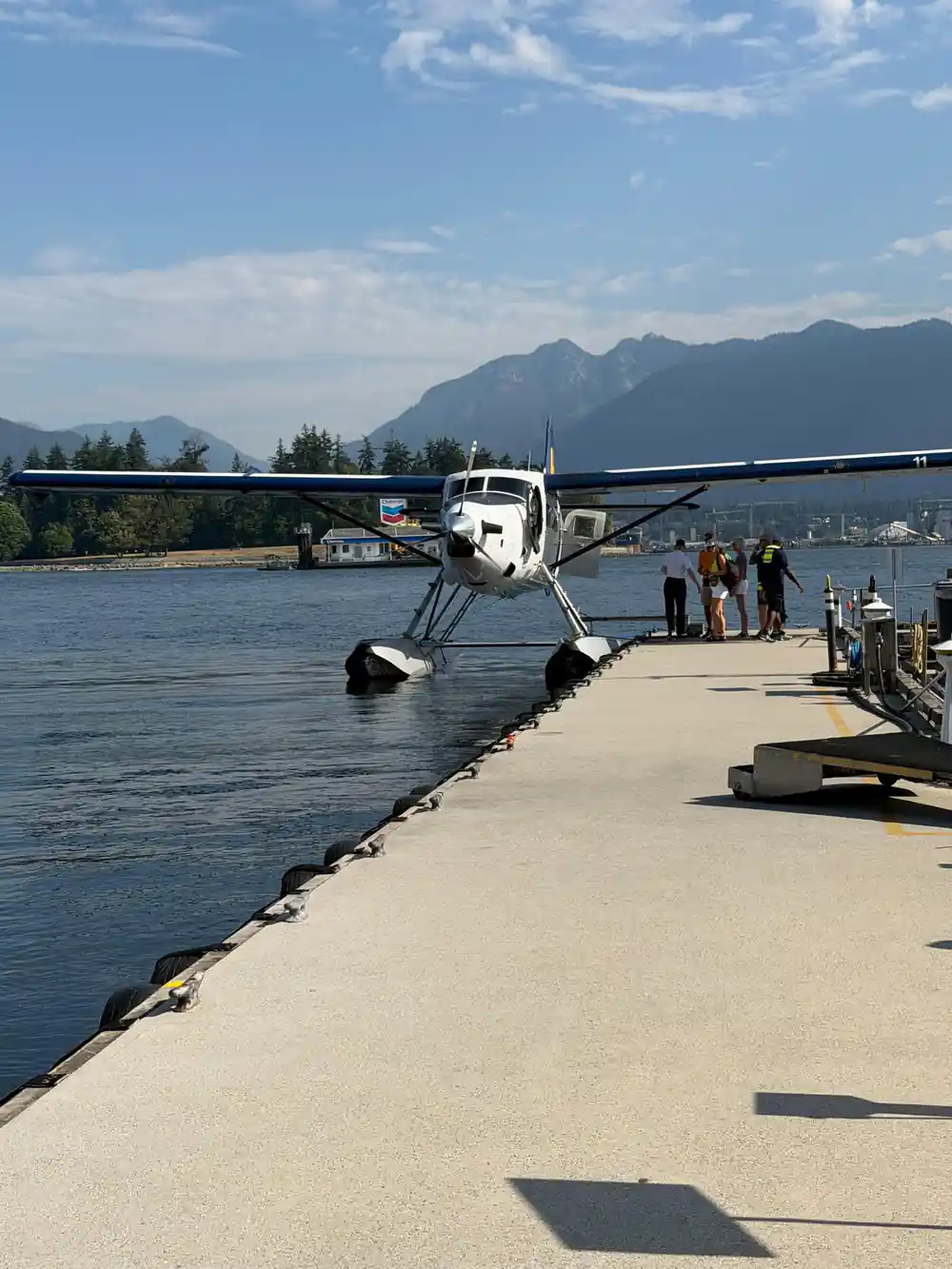
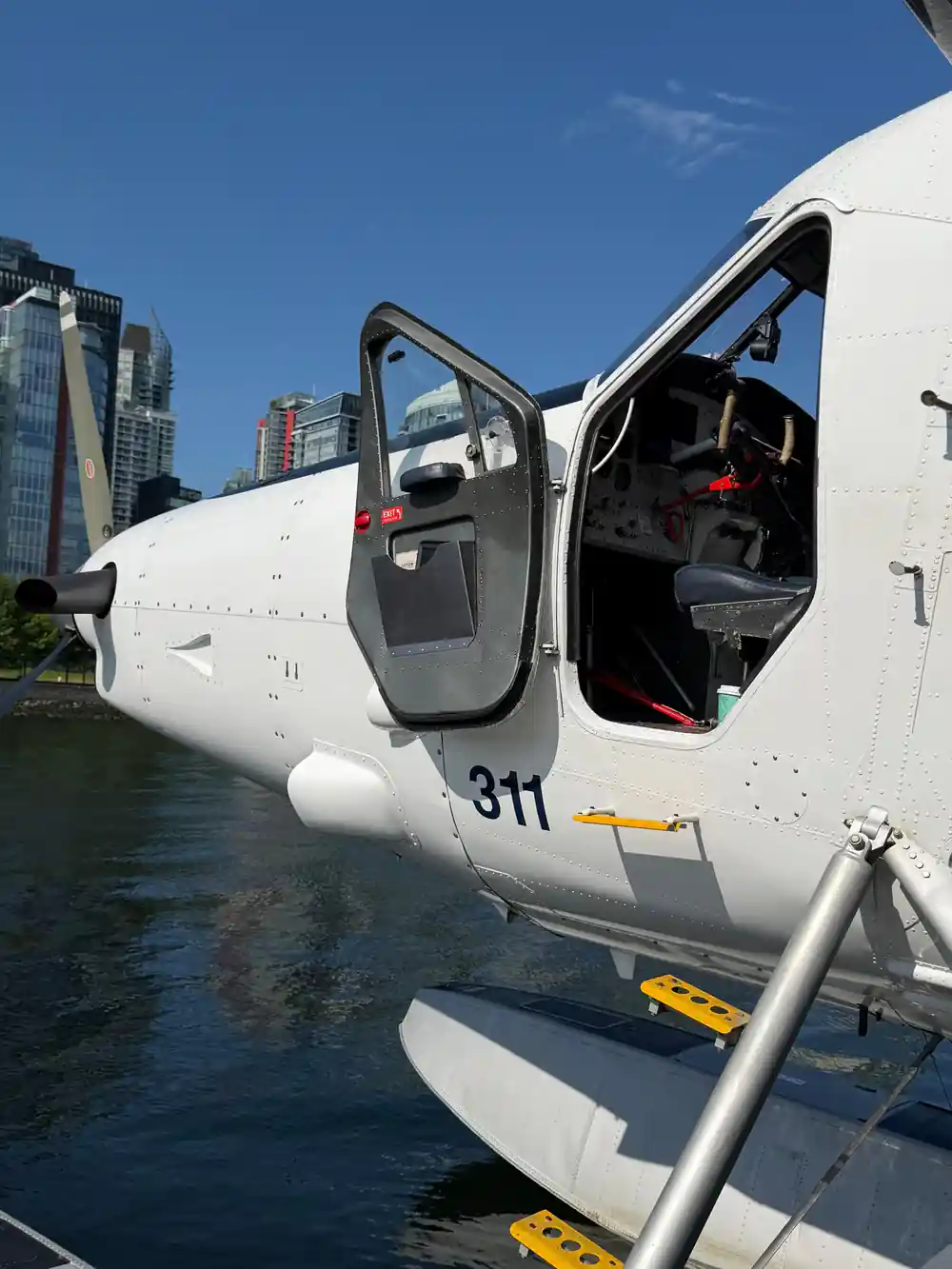
When it is time, somebody walks you down a ramp onto a floating dock and you step onto the aircraft's float and then into the cabin. This is a mildly athletic moment and it is the reason the trip is listed as unsuitable for people with mobility impairments.
Inside, the cabin seats a handful of people in single seats either side of a narrow aisle. Everybody has a window because there is no seat that is not next to one, and the pilot is a metre or two in front of you with no door in between.
The take-off
The aircraft leaves the dock and taxis out into the harbour under its own power, moving like a boat and steering like one. That already feels wrong in an interesting way: you are in an aeroplane and it is making a wake.
Then the engine opens up. Spray comes past the windows, the floats begin to plane across the surface rather than through it, the nose lifts, and at some point that is hard to identify precisely the buffeting stops and you are flying. On calm water it is remarkably smooth; on a choppy day you feel every one of them.
The climb out crosses Burrard Inlet with the downtown towers off to one side at roughly your own height for the first few seconds. Very few flights anywhere begin with a view of a city from that angle.
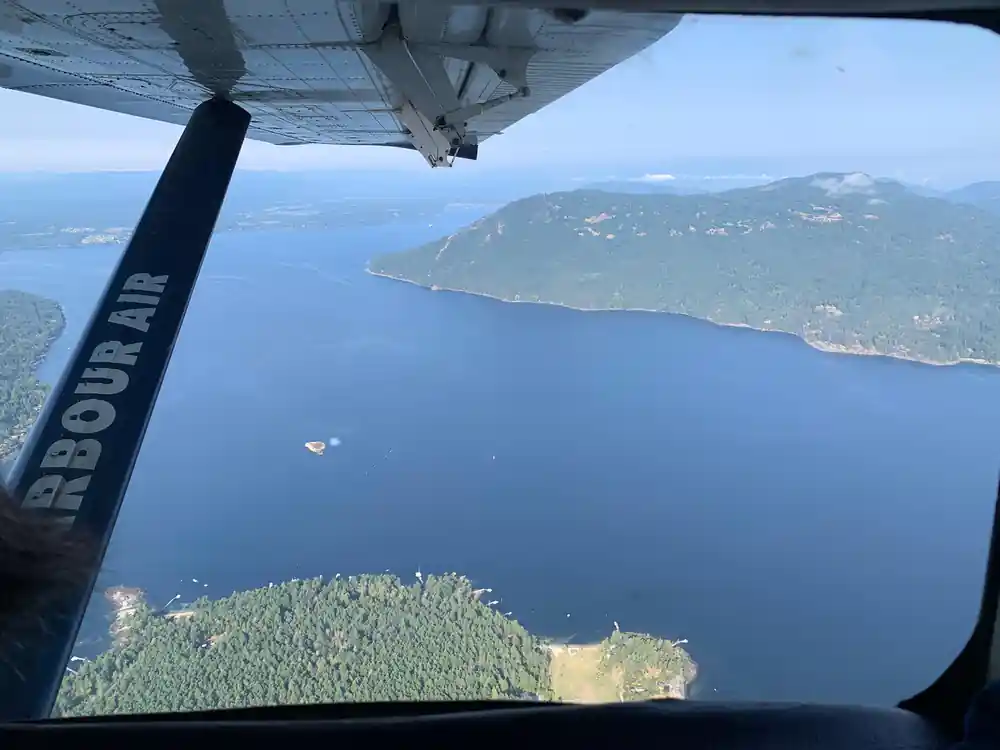
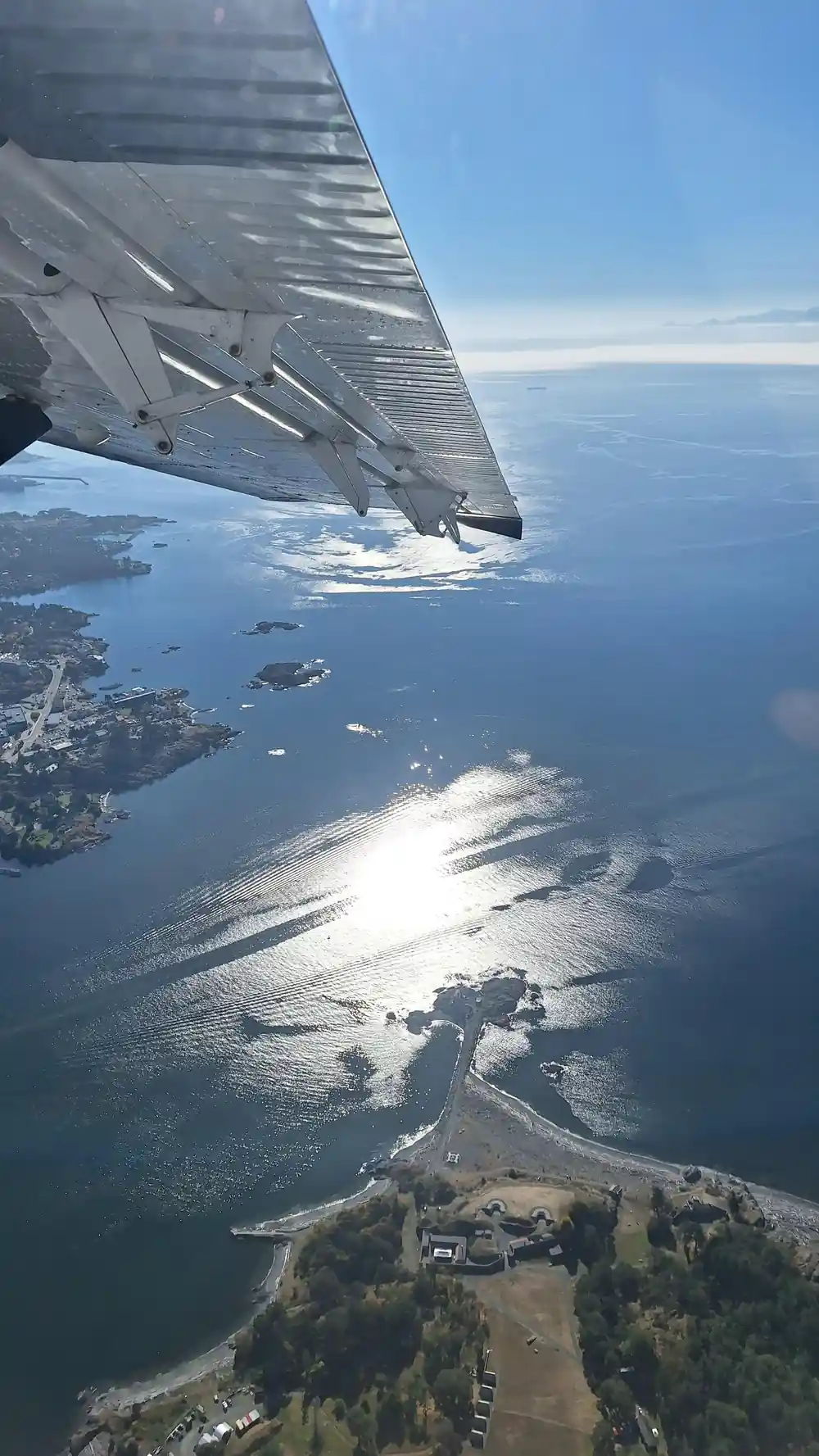
The Gulf Islands from a few thousand feet, laid out like a map
Across the Strait of Georgia
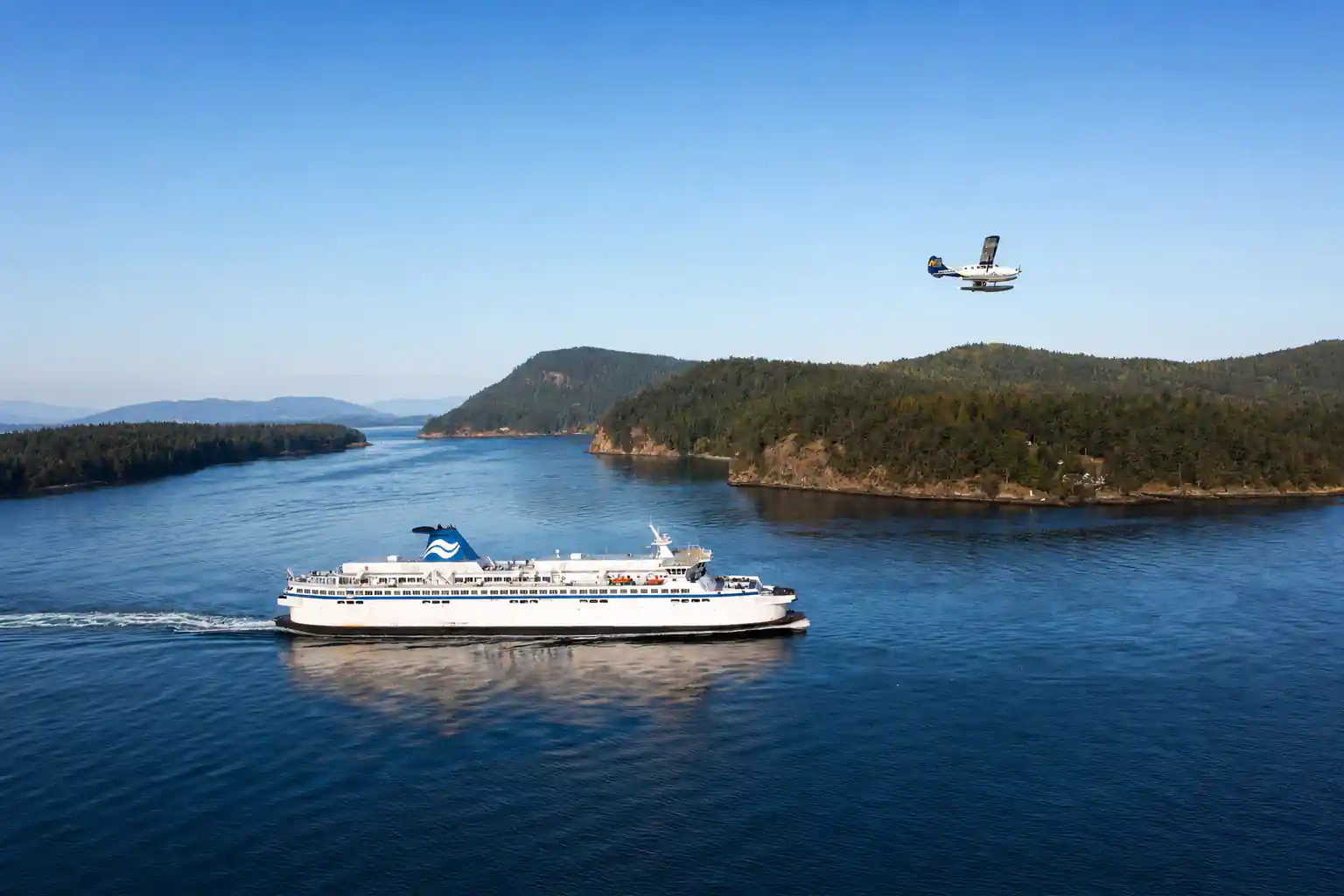
The route runs south-west out of the harbour and over the Strait of Georgia, the body of water separating the mainland from Vancouver Island. At floatplane altitude you are low enough to read the water: ferry wakes, tugs, log booms, the colour changing over shallows.
Then the Gulf Islands, which are the best part. They are low, forested and irregular, scattered through the strait in a way that from ground level reads as a horizon and from the air reads as a map. You can see the shape of every bay and the boats anchored in them.
On a clear day the Coast Mountains are behind you and the Olympics are ahead across the water to the south. On an ordinary west coast day you are between two cloud layers with the islands underneath, which is its own thing entirely.
How high, how fast, how bumpy
A floatplane on this route flies a few thousand feet up rather than tens of thousands. That is the single fact that makes the flight what it is: everything below stays legible for the whole crossing rather than becoming an abstraction.
It is also why you feel the air. Thermals, wind off the islands and the general texture of a low-altitude flight mean the ride is livelier than a jet. It is not alarming and it is not smooth in the way people expect from flying, and anybody who dislikes small aircraft should know that in advance.
Noise is the other difference. A single turboprop or radial in a small cabin is loud, conversation takes effort, and some operators hand out headsets. Most people stop noticing after five minutes.
35 min
Thirty-five minutes dock to dock, against most of a day if you take a bus to a ferry terminal, cross, and take another bus at the far end.
The landing
The approach into Victoria comes over the outer harbour and descends into the Inner Harbour itself, which is a working basin surrounded by the city. You are below roofline on final, which is a genuinely strange sensation in an aircraft.
Touchdown on water is softer than on tarmac and much longer: the floats meet the surface, the hull settles, spray goes up, and then you are a boat again, taxiing to a dock with the Parliament Buildings and the Empress hotel filling the windscreen.
You step off onto a dock in the middle of Victoria, walk up a ramp, and you have arrived. No terminal to cross, no bags to collect from a belt, no transfer to arrange.
Where to sit, and what to bring
There is no bad seat, but the ones immediately behind the pilot give you the forward view through the windscreen as well as the side window, and on this route that is worth having. Seating is generally assigned by weight distribution rather than preference, so it is not something to plan around.
Bring something for the noise if you are sensitive to it, and a camera you can operate one-handed. The windows are small and the light is bright, so anything you want to photograph needs to be ready before the moment arrives.
And keep your bag small. The eleven kilogram allowance includes everything you carry, which on a thirty-five minute flight is easy to live within and easy to forget about.
Weather, and what you actually see
West coast weather decides how much of this flight is a view and how much is an experience. On a clear summer morning you see the Coast Mountains behind, the Olympics across the water and every island underneath, sharp to the horizon.
On an ordinary overcast day the aircraft often flies between layers, with cloud above and the strait below, which is atmospheric rather than disappointing and photographs surprisingly well. Genuine fog is the condition that stops floatplanes rather than spoiling them.
Nothing about the route requires good weather to be worth doing, but the difference between a clear day and a grey one on this crossing is larger than on most flights, simply because you are close enough to the ground for detail to matter.
Water take-off, the Gulf Islands, a harbour landing
from US$305Reserve now & pay later