In a nutshell
- Harbour Air is generally described as the world's largest all-seaplane airline, operating a fleet entirely on floats out of harbour terminals rather than airports.
- This is a timetabled route between two city centres used by commuters and business travellers, not a sightseeing charter that happens to go somewhere.
- The fleet is built around Otters and Beavers, rugged Canadian bush aircraft designed in the 1940s and 50s and still the standard for this work.
- The Vancouver to Victoria harbour route is one of the busiest floatplane corridors anywhere, with departures through the day rather than once or twice.
What kind of airline this is
Harbour Air is not a tour company that owns aircraft. It is a scheduled airline whose entire fleet operates on floats, flying between harbour terminals in coastal British Columbia, and it is routinely described as the largest all-seaplane operator in the world.
That distinction matters for what you are buying. A sightseeing charter exists to show you something and returns you where you started. A scheduled service exists to move people who need to be somewhere, and the Vancouver to Victoria run carries a great many of them: lawyers, civil servants, people going to meetings and coming home the same afternoon.
You are booking a seat on that service. The view is extraordinary and entirely incidental to the purpose, which is a large part of why it feels different from a flightseeing trip.
The aircraft
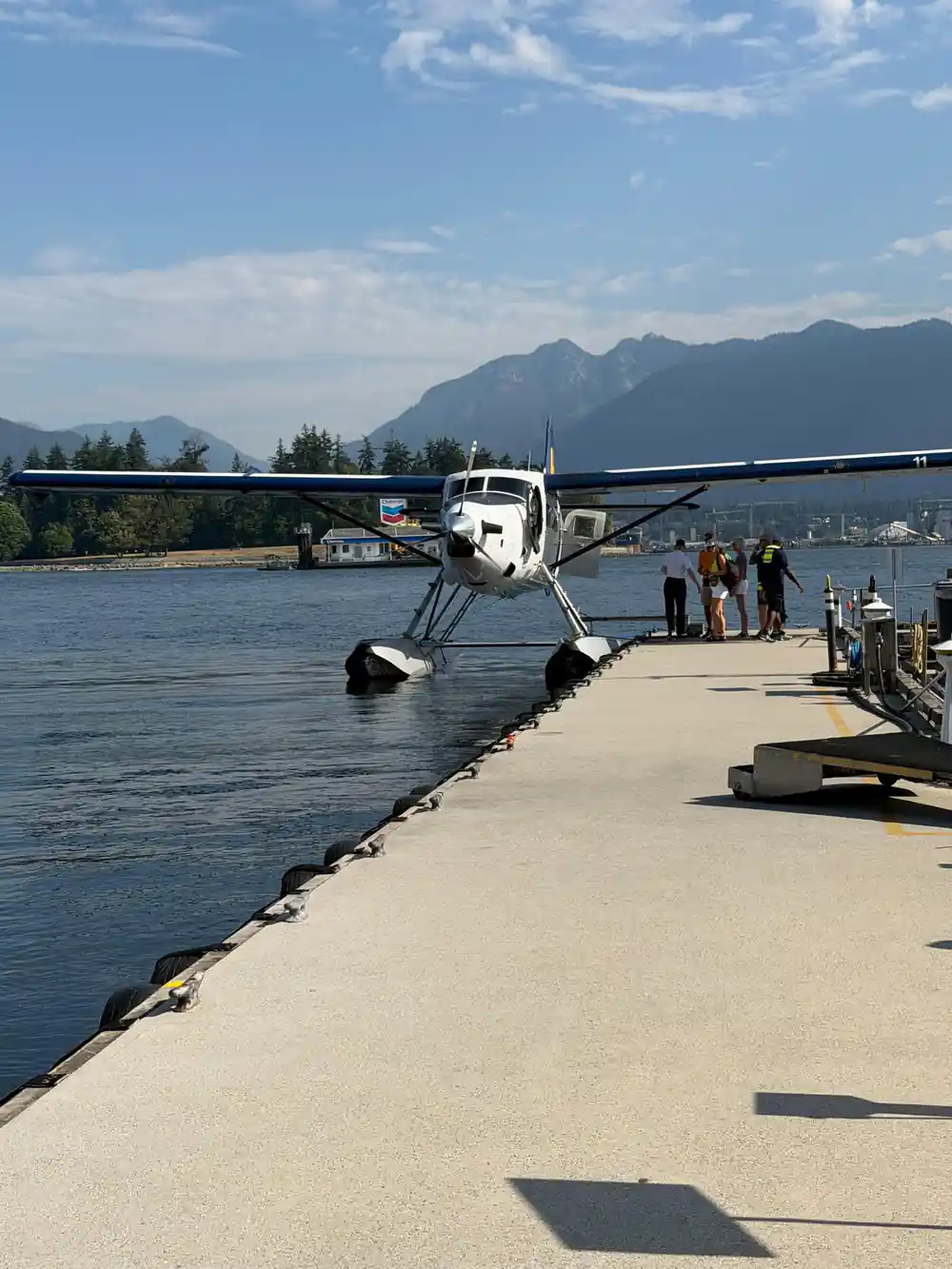
The fleet is built around de Havilland Canada designs: the single-engine Otter and the smaller Beaver, aircraft conceived in the years after the Second World War for bush operations in the Canadian north. They were built to take off from short water, carry a useful load and survive being operated hard in bad places.
Seventy years later they remain the standard for exactly this work, which says something about how well the original brief was answered. Many airframes flying today are older than their passengers and have been rebuilt more than once.
The company has also been notably active in electrifying floatplanes, converting an aircraft to battery power and flying it, which given the short stage lengths on these routes is a more plausible proposition here than almost anywhere else in aviation.
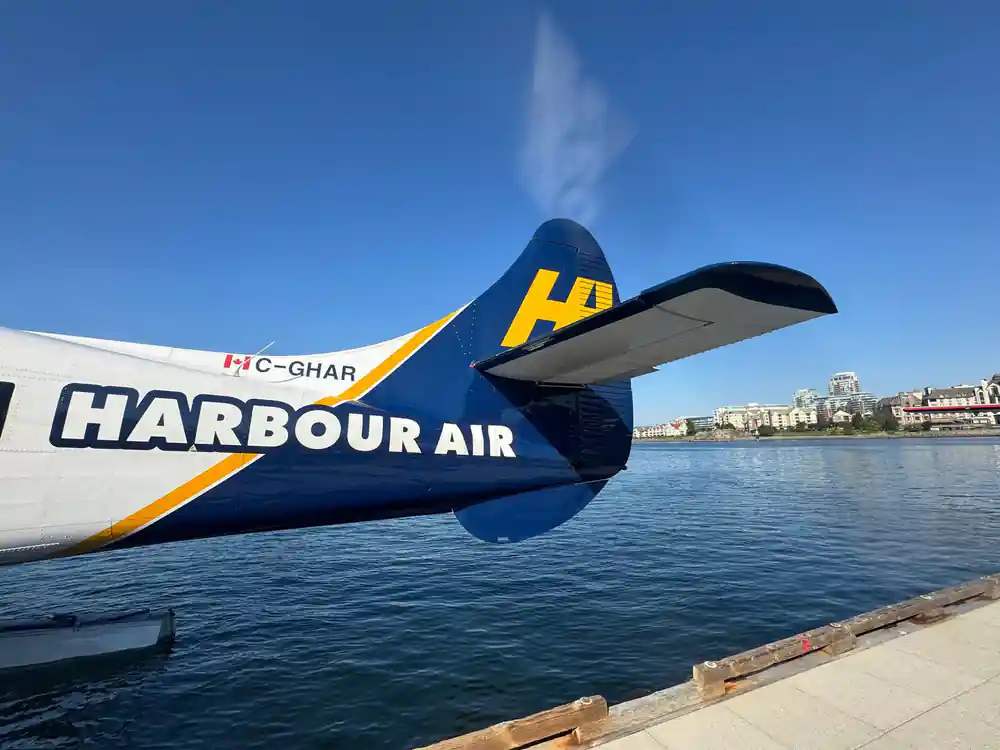
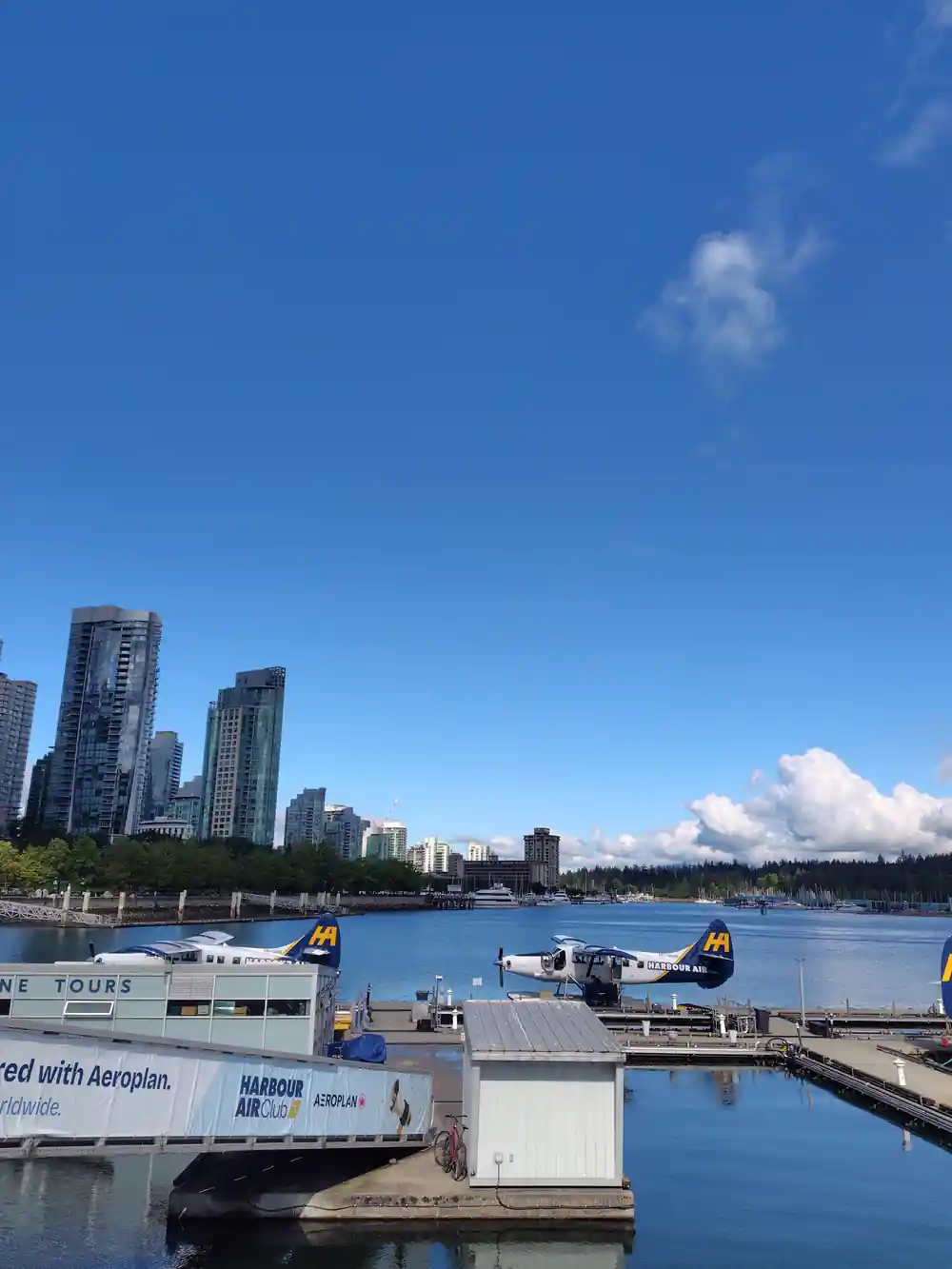
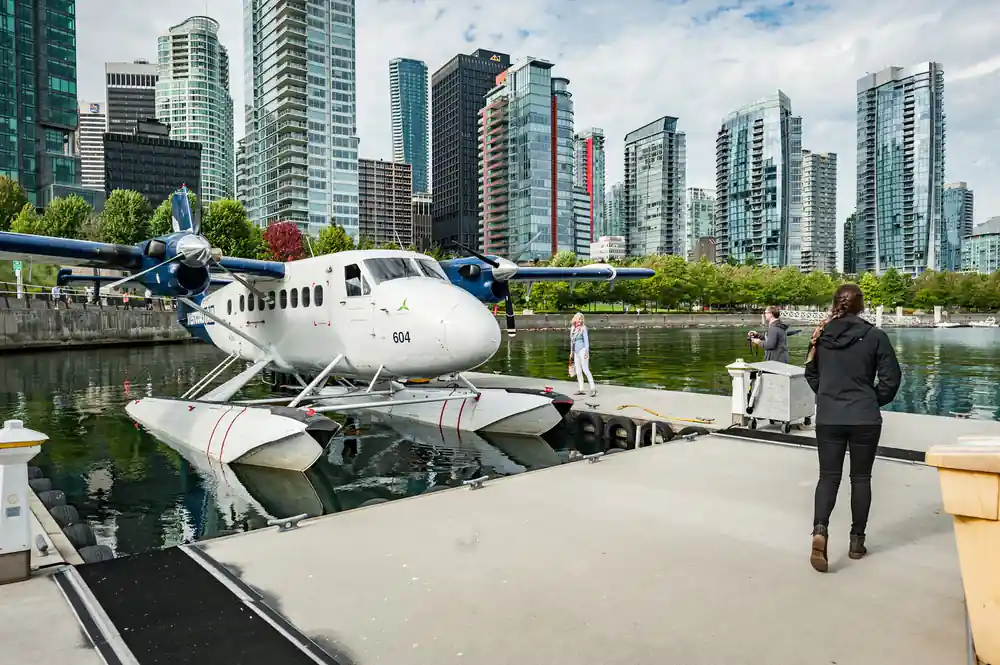
A float-equipped de Havilland at the dock, engine still ticking over
Why a harbour terminal changes the airline
Operating from water in the middle of a city imposes a particular discipline. There are no long taxiways, no gates and no airbridges, so the whole operation is small, quick and physically close to the passenger. You can see your aircraft from the check-in desk.
It also removes most of the overhead that makes short flights slow. The forty minute check-in cutoff on this route would be an impossible ambition at a major airport, and it works here because the walk from counter to seat is measured in metres.
The trade is exposure. A harbour operation is at the mercy of visibility, wind and sea state in a way a runway operation is not, which is why weather is a more frequent topic on a floatplane route than on a jet one.
Frequency and reliability
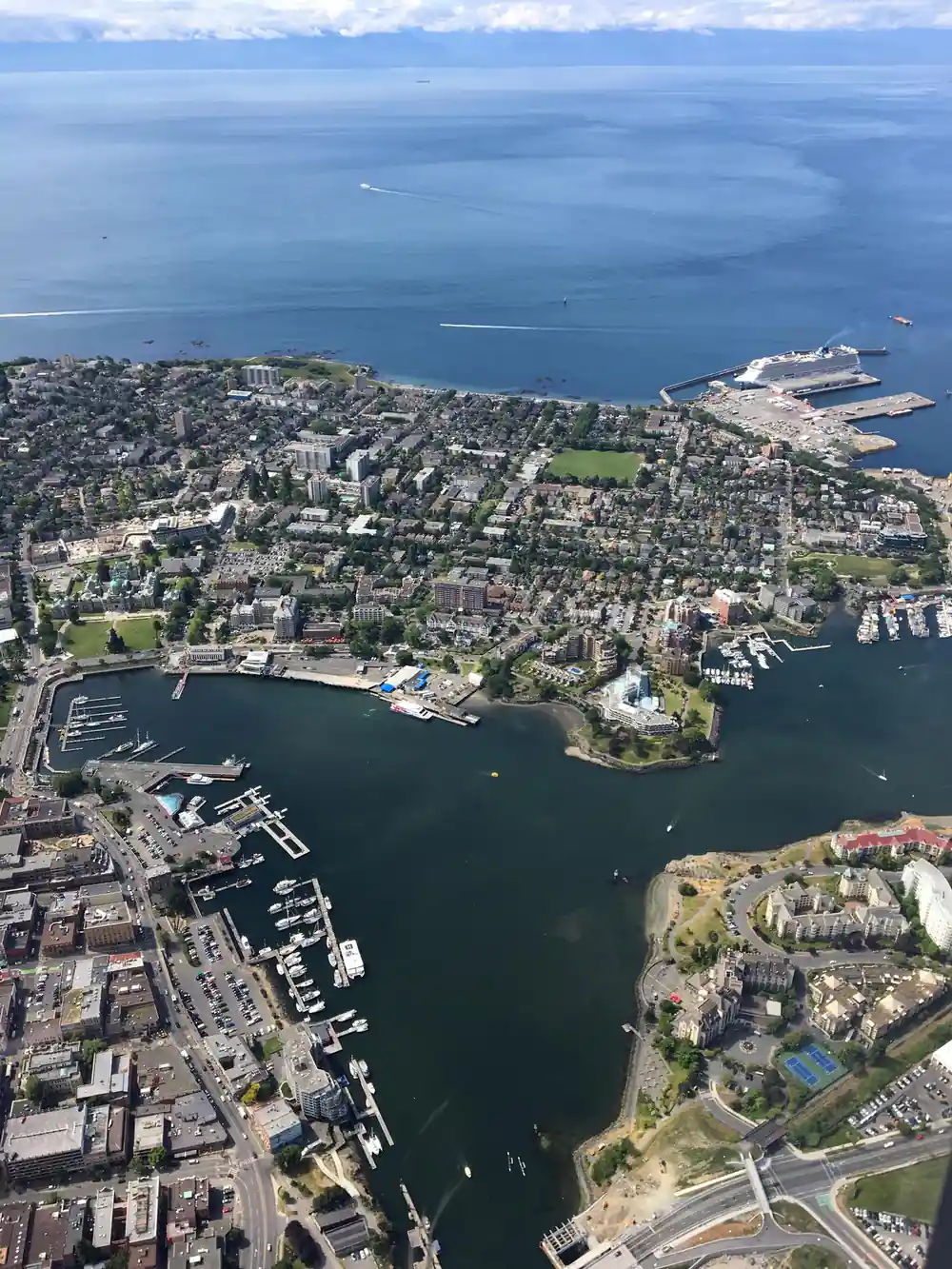
The Vancouver to Victoria harbour corridor is among the busiest scheduled floatplane routes in the world, with departures spread through the day rather than a single morning service. That frequency is what makes the route useful and what gives the operator room to move people to another flight when one is affected.
Reliability on these routes is generally good and is genuinely weather-dependent. Fog and low cloud are the usual causes of delay, and they are seasonal rather than random: the winter months are more likely to disrupt than the summer ones.
What happens when a flight cannot operate is the question worth asking at the time of booking rather than at the counter, and the answer varies with how the ticket was sold.
1940s
The Beaver and Otter were designed after the Second World War for Canadian bush flying, and seventy years on they remain the standard for this work.
Safety, honestly
Commercial floatplane operations in British Columbia are regulated in the same framework as any other commercial air service in Canada, with the same licensing, maintenance and oversight requirements. This is not an unregulated activity and the pilots are professionals flying the same route many times a week.
It is also true that small aircraft operating low, over water, into confined harbours in a region known for fog is a more demanding kind of flying than a jet between two large airports, and the industry's record in coastal Canada reflects that it is demanding.
The honest summary is that this is a mature, heavily used scheduled service with a long operating history, flown by people who do this daily. Anyone genuinely anxious about small aircraft should weigh that rather than be talked out of the worry.
What this means for your booking
You are on a real airline schedule, so the rules that follow are airline rules rather than tour rules: identification is checked, baggage is weighed, and there is a check-in cutoff that is enforced because the aircraft has a departure slot and a load sheet.
It also means the experience is briskly professional rather than hosted. Nobody will narrate the Gulf Islands for you. The crew's job is to get a full aircraft across the strait safely and on time.
For most people that is the appeal. It is a piece of ordinary British Columbian transport infrastructure that happens to be one of the best short flights available anywhere.
What it is like to be a passenger on a commuter run
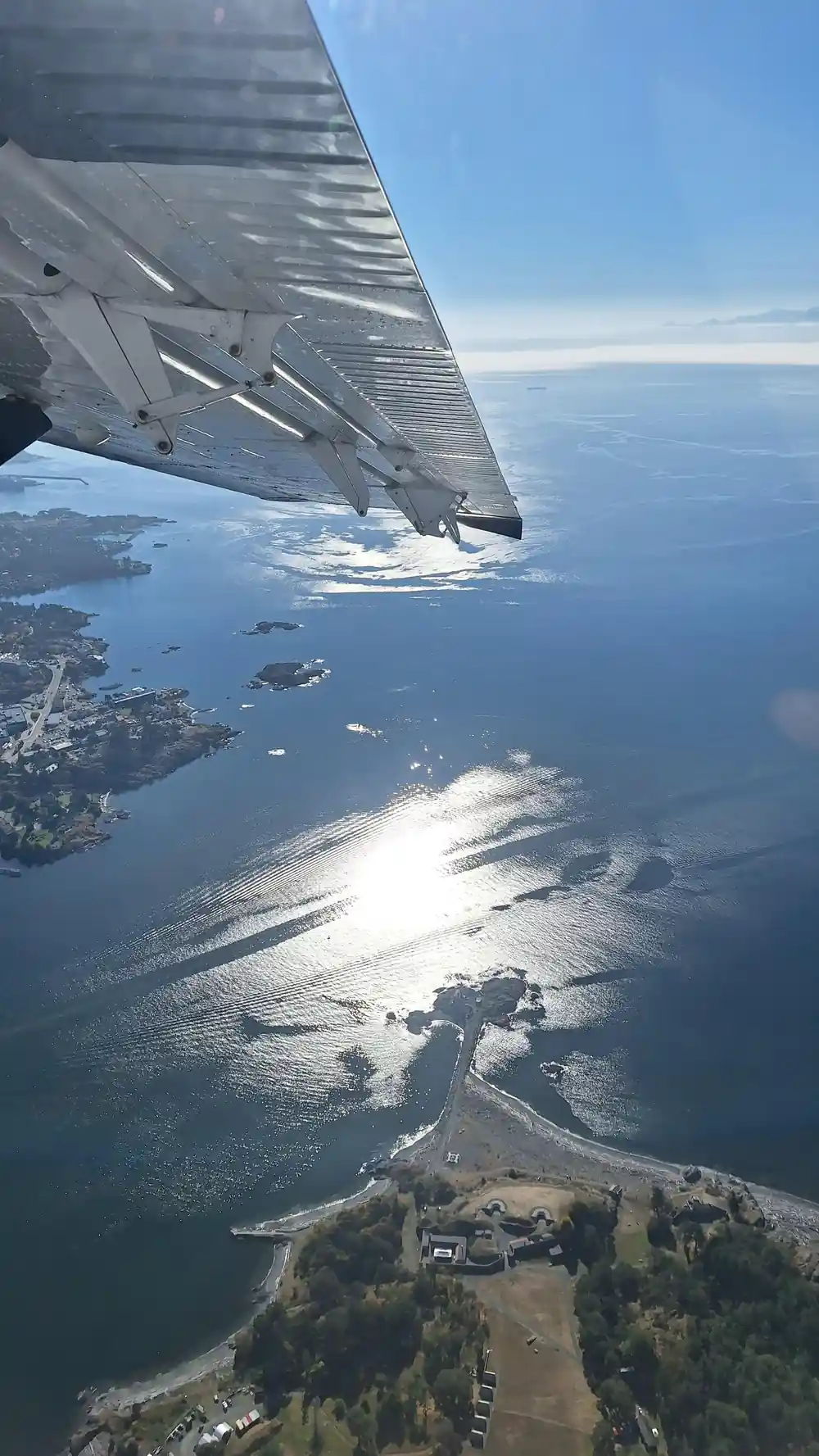
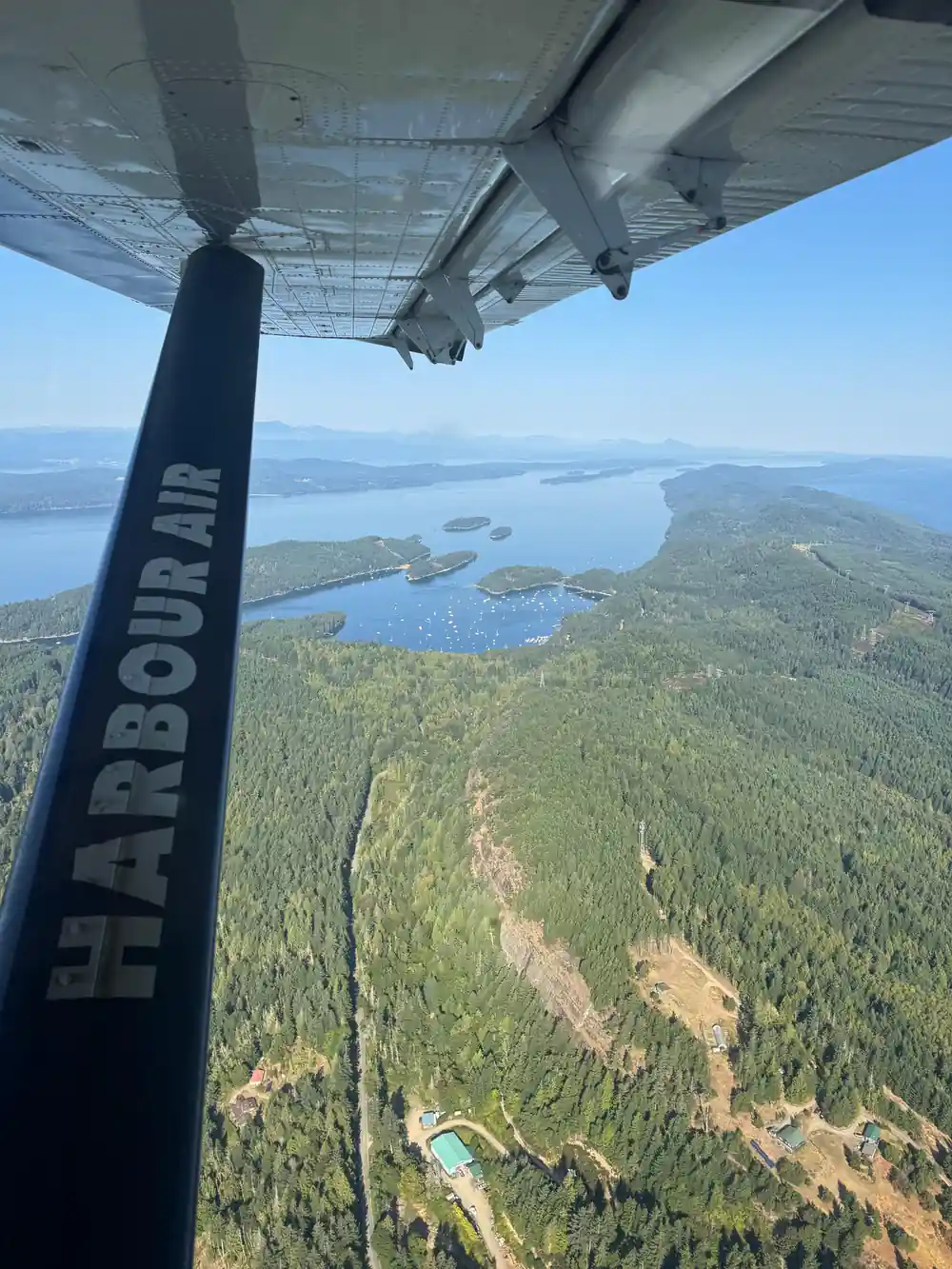
The atmosphere on a working route is different from a tourist one. A good proportion of the cabin has done this many times, is carrying a laptop bag rather than a camera, and pays no attention whatever to the Gulf Islands going past underneath.
That is oddly reassuring. Nothing about the operation is performed for visitors: the briefing is quick, the crew are unhurried, and the whole thing runs with the flat competence of a service that operates many times a day in most weather.
It also means you are welcome to be the person with the camera. Nobody minds, and the regulars are used to sharing the cabin with people having a much better morning than they are.
A scheduled airline, not a sightseeing charter
from US$305Reserve now & pay later