In a nutshell
- Floatplanes fly by visual reference, so what stops them is visibility rather than rain. A wet day usually flies; a foggy morning may not.
- June to September gives the clearest air, the longest days and the best chance of seeing the Coast Mountains and the Olympics from the cabin.
- The return leg is far less weather-sensitive than the flight. On a marginal day the half of the trip at sea level is the half that still happens.
- If a flight is grounded, having another day to move to turns a cancellation into a rescheduling rather than a loss.
What actually stops a floatplane
Visibility. These aircraft operate under visual flight rules on this route, which means the pilot needs to see where they are going rather than fly on instruments through cloud. Fog, and low cloud sitting on the strait, are what cancel flights.
Rain, by itself, generally does not. A grey wet day with a reasonable cloud base is an ordinary flying day on this coast, and the view underneath is often better than people expect because the light is even and the water goes dark.
Wind and sea state matter too, at the harbour rather than in the air. A floatplane needs water it can safely take off from and land on, and a badly disturbed harbour is its own constraint.
The seasons, honestly
Summer, roughly June through September, is the most reliable window and the one with the best views. Clear air, long days, the Coast Mountains visible behind you and the Olympic range across the water to the south. It is also the busiest period, so seats go.
Autumn brings the fog season on this coast. Morning fog that burns off by mid-morning is a common pattern rather than an unusual one, which affects early departures more than later ones and is worth bearing in mind when choosing a time.
Winter has short days and more low cloud, and the flight is still an ordinary scheduled service that operates most days. Spring is variable and improving, and by May the odds are good.
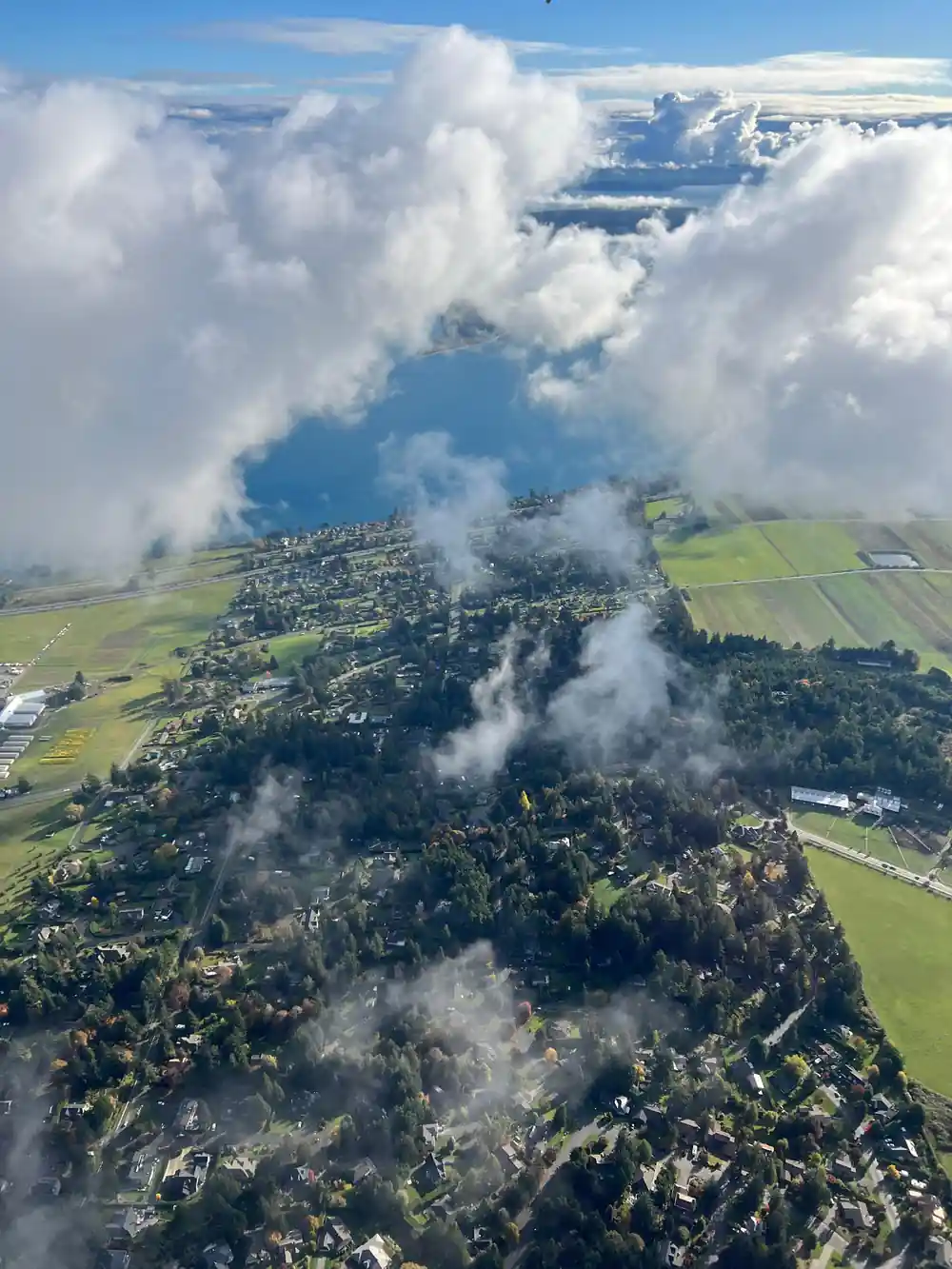
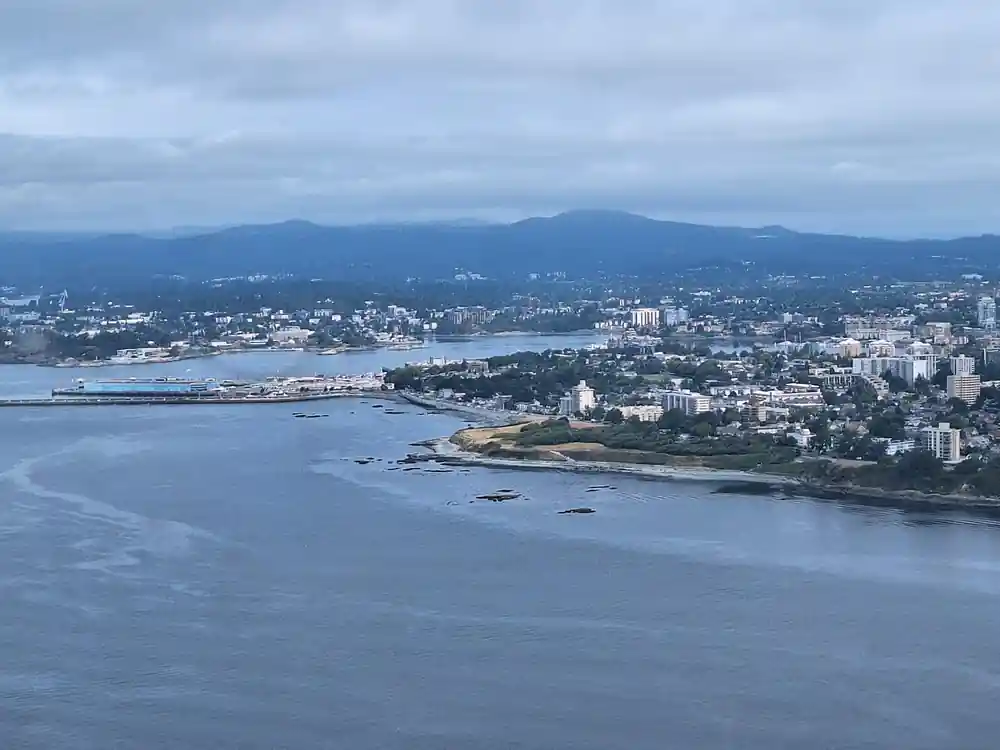
Cloud on the strait, with islands appearing through the gaps
Why this trip is unusually robust
Half of it is not flying. The return is a coach, a ferry and a coach, and BC Ferries sails in weather that would ground a floatplane comfortably. A day that is marginal in the air is often entirely normal at sea level.
That asymmetry is quietly useful. If the outward flight cannot operate, the surface alternative on this corridor exists and runs frequently, which is not true of every seaplane route.
What it means practically is that the risk on this booking is concentrated in one thirty-five minute leg rather than spread across the whole day, and that leg is the one with the most alternatives behind it.
What happens if the flight is cancelled
The operator's options are to move you to a later departure or to rebook, and the high frequency of this corridor makes the first one genuinely likely rather than theoretical. Fog that clears by eleven is a delay rather than a cancellation.
How your particular booking is handled is a question for the point of sale, and it is the single most useful thing to establish when you buy rather than at the counter on the morning. Different sellers handle it differently.
The general principle across this network of trips holds here: book it early in your stay rather than on your last day. A cancellation with three days left is an inconvenience; on the morning of your flight home it is a loss.
Fog
Not rain. A floatplane on this route flies by visual reference, so what grounds it is visibility, and a wet day with a decent cloud base flies normally.
The view, by conditions
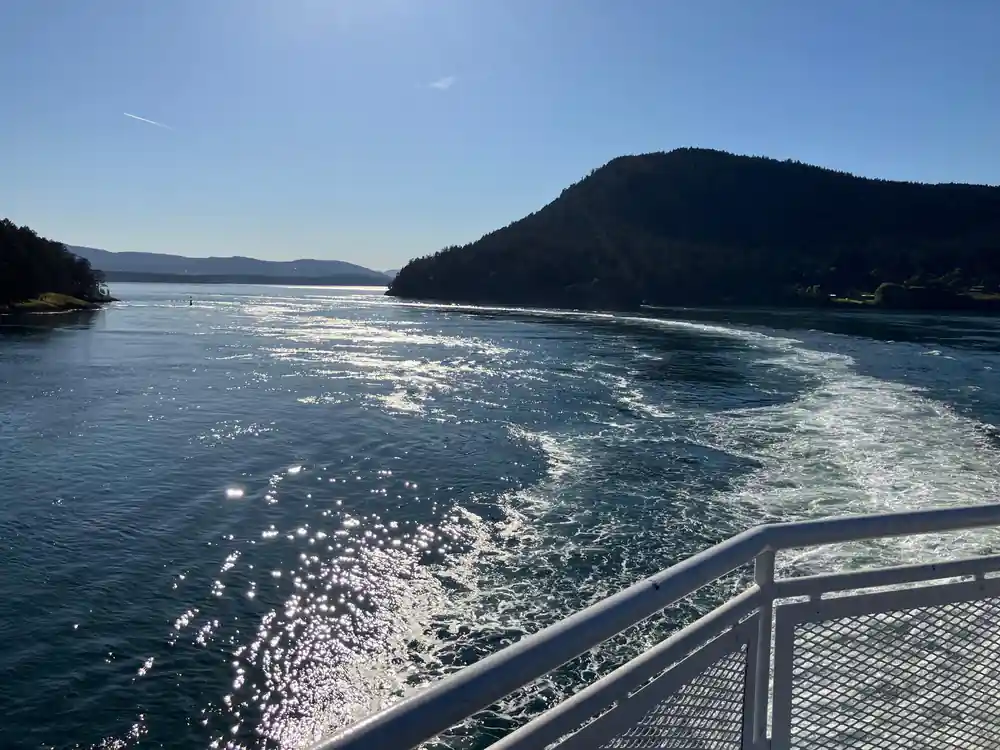
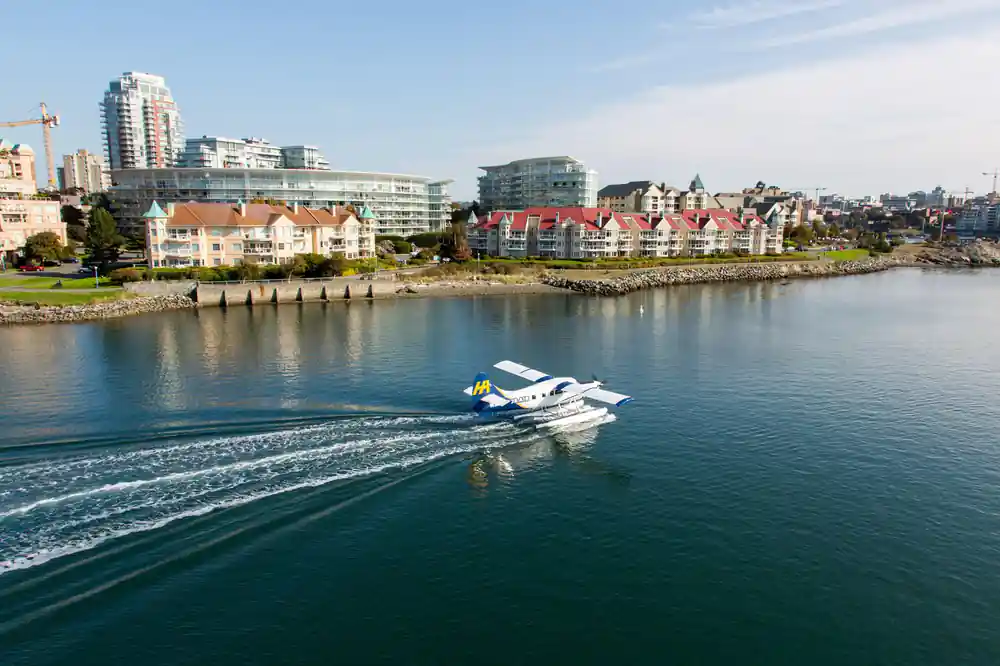
On a clear day the flight is one of the best short scenic journeys anywhere: the whole Strait of Georgia, the Gulf Islands laid out underneath, mountains on both horizons. That is what the photographs show and it is genuinely common in summer.
Between layers, which is a frequent west coast condition, you get cloud above, sea below and islands appearing through gaps. Less postcard, more atmosphere, and a lot of people prefer it.
In genuinely poor visibility the flight does not go, so there is no scenario where you pay for a view and are handed a grey window for thirty-five minutes. That is the one mercy of a visual-rules operation.
Temperature and what to wear
Both cities are mild by Canadian standards and neither gets very hot. The relevant fact for this trip is the ferry deck in the evening: the Strait of Georgia is cooler than either shoreline and there is always wind on an open deck.
A windproof layer is the single useful item, in any month of the year. In summer you will want it for two hours on the evening crossing; in winter you will want it from the moment you leave the hotel.
The aircraft cabin is warm and small, and the terminals at both ends are indoors, so nothing else about the day requires any thought about clothing at all.
Choosing a time of day
Earlier is better for hours in Victoria and slightly worse for fog. A mid-morning departure sidesteps the classic burn-off pattern while still landing you on the island with the whole afternoon available.
The return is the fixed constraint at the other end, so the useful question when booking is not only what time the flight goes but what time the coach leaves Victoria. The gap between those two numbers is your day.
And if the forecast is genuinely poor on the morning, the honest advice is to ring rather than to travel hopefully. A small operator on a visual route knows by breakfast what the day is going to do.
Best in summer, workable most of the year
from US$305Reserve now & pay later