In a nutshell
- Check in at the Harbour Air counter at least forty minutes ahead of your flight time. It is a real cutoff on a scheduled service, not a suggestion.
- Adults need a passport or identity card, or a driver's licence. It feels like a boat trip and it is a flight, and it is checked at the desk.
- This is one of the busiest floatplane corridors anywhere, with services spread across the day rather than a single morning departure.
- Fog and low cloud are what stop floatplanes. It happens, it is seasonal, and it is the one thing worth asking about when you book.
The forty minute rule
Check in at the counter at least forty minutes before your scheduled departure. That is the operator's own instruction and it is enforced, because the aircraft has a departure slot, a load sheet to complete and a small number of seats that have to be assigned by weight.
Forty minutes sounds tight to anybody used to airports and generous to anybody who has used this terminal before. The building is small, the walk to the dock is short, and there is no security screening, so the time is spent on the actual process rather than on queueing.
Arriving earlier is not a problem. There is a waiting area with a view of the dock and the aircraft coming and going, which is a considerably better place to spend twenty spare minutes than a departure lounge.
What you need to bring
Photo identification. Adults are asked for a passport or a national identity card, or a driver's licence, and it is checked at the counter before you are given a seat. This surprises people, because a harbour terminal with no security gates does not feel like aviation until that moment.
It is aviation. The same rules that apply to a scheduled airline apply here, which is also why bags are weighed and why the departure time is a departure time rather than an approximation.
Everything else is optional: a jacket, a camera, and whatever you want for a day in Victoria. The eleven kilogram allowance covers all of it together, which for a day trip is not a constraint anybody notices.
What happens if you are late
You miss the flight. That is the honest answer on a scheduled service where the load sheet has already been calculated and the aircraft is holding a slot in a working harbour.
The mitigating fact is frequency. This corridor runs services through the day rather than once, so being moved to a later departure is usually possible, though it is at the operator's discretion and depends on how full the day is.
The practical consequence for this trip is that the return coach and ferry are booked for a specific time, so a missed morning flight compresses your hours in Victoria rather than extending the day at the far end.
The counter, the scale, and a window onto the dock
Weather, and what it actually does
Floatplanes fly by visual reference rather than in cloud, so what grounds them is visibility. Fog is the principal cause on this coast, and low cloud over the strait is the second. Wind and sea state matter for the harbour operation itself.
It is seasonal rather than random. The autumn and winter months carry more fog and lower cloud than midsummer, and morning fog that burns off by mid-morning is a common west coast pattern rather than an unusual one.
When a flight cannot operate, the operator's options are a later departure or a rebooking, and on a combined trip like this one the alternative surface routes exist. What matters is that you ask how your particular booking handles it at the time you make it, rather than assuming.
The terminal itself
The Vancouver Harbour Flight Centre is at 1055 Canada Place, at water level by the sea wall, below the Olympic Cauldron and beside the cruise terminal. It is small, modern and easy to miss if you are looking for something that resembles an airport.
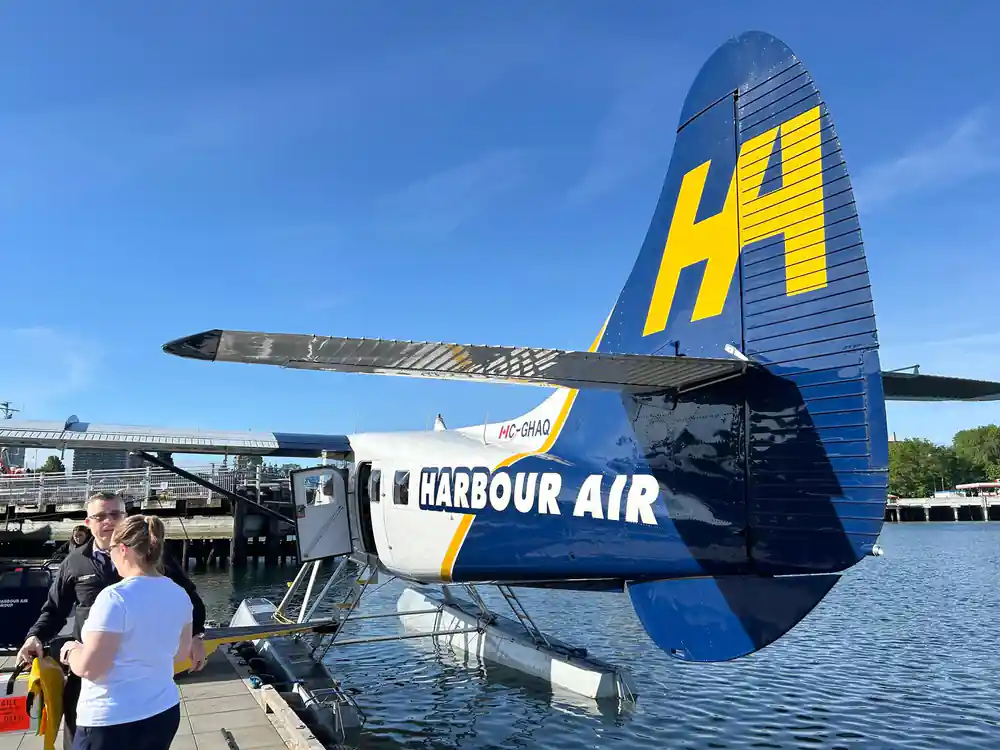
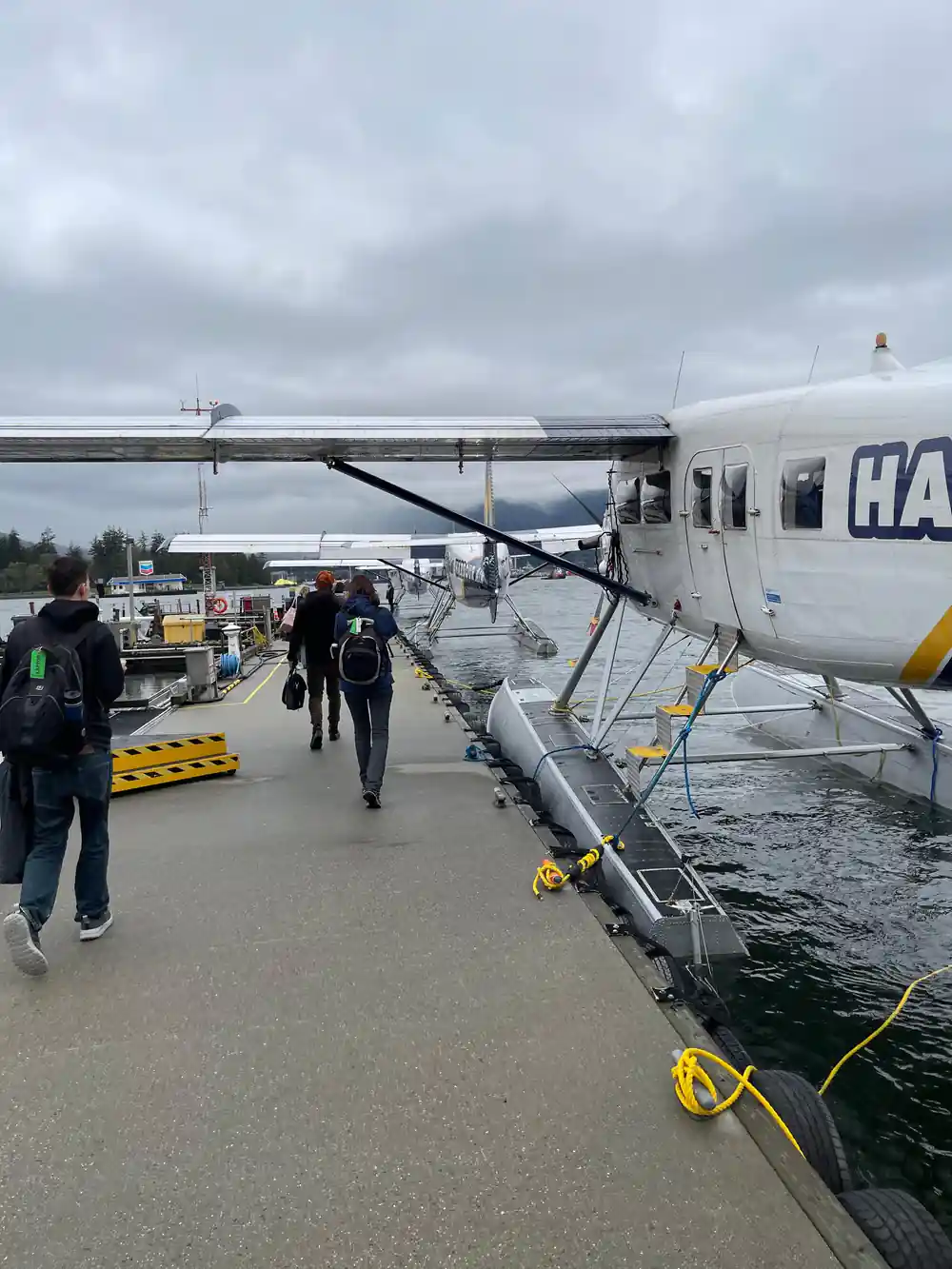
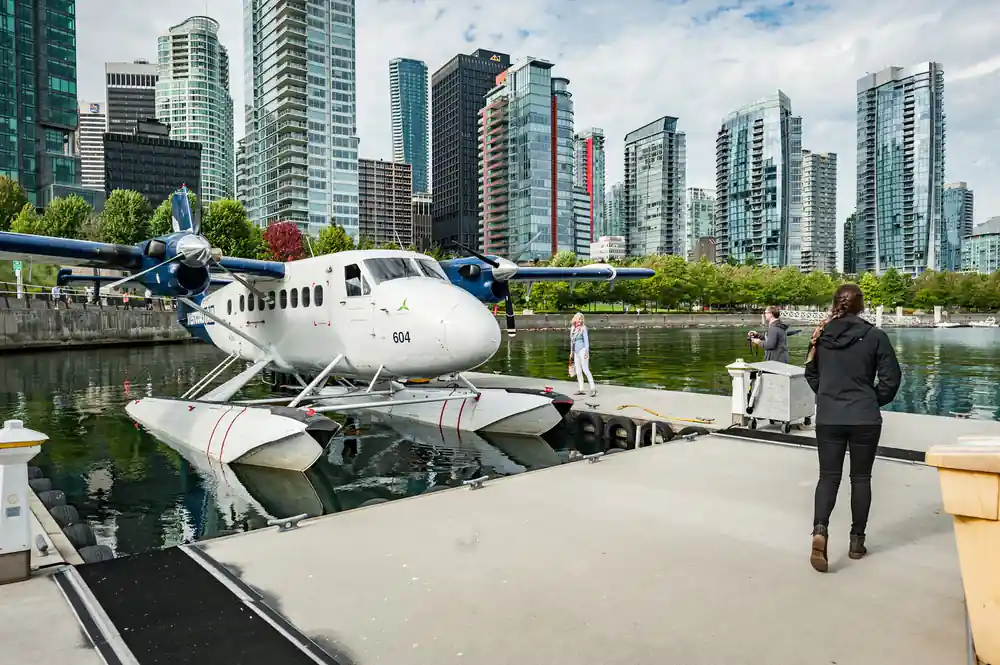
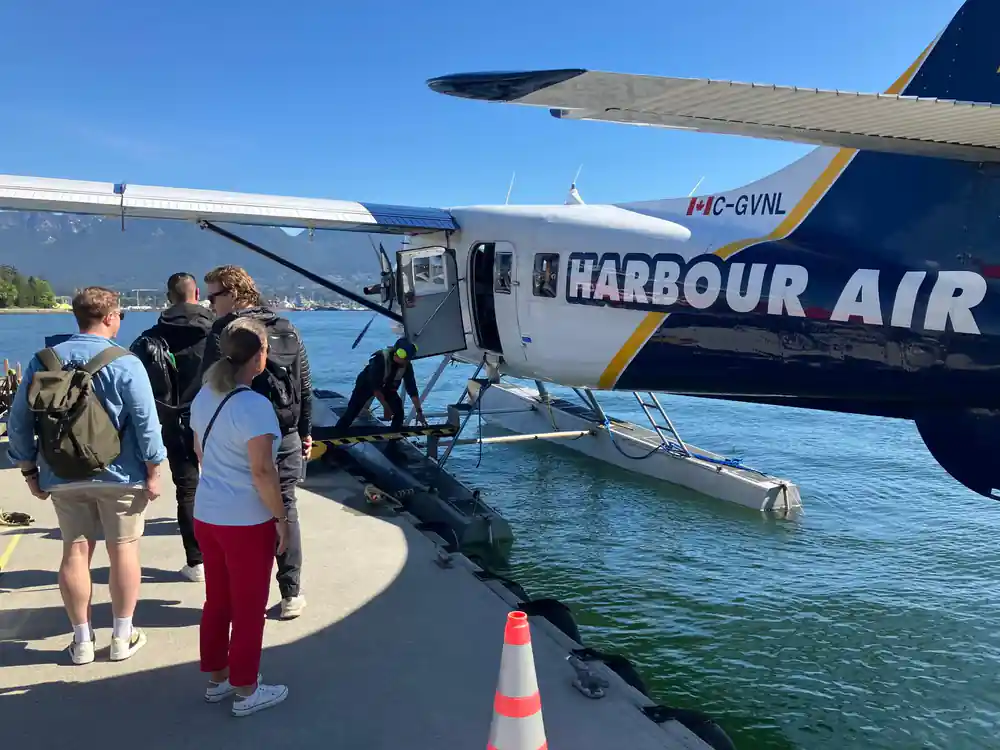
Inside there is a check-in counter, a scale, seating, and a view of the dock. That is essentially the whole building. When your flight is called, somebody walks the group down a ramp to the floating dock and you board directly.
That boarding step, from ramp to float to cabin, is the part that makes the trip unsuitable for people with mobility impairments, and it is worth being clear-eyed about rather than optimistic.
Timing the rest of the day around it
The flight is the fixed point of the morning and the return coach is the fixed point of the evening. Everything between them is yours, which is why this trip suits people who dislike being on a schedule.
Give yourself margin at the Vancouver end rather than the Victoria end. Getting to Canada Place is easy unless a cruise ship is turning around, in which case the streets around it are genuinely congested and worth an extra fifteen minutes.
And do not plan anything in Vancouver tight against the evening arrival. Ferries and coaches are punctual and they are not immune to weather or loading, and Pacific Central is across town from where the day began.
Booking, and what to ask
Three questions cover the practical ground. What time is the flight, what happens if weather grounds it, and what time does the return coach leave Victoria. The third one determines how long you actually get on the island.
It is also worth confirming that identification requirement for everybody in your party before you leave the hotel, because a driver's licence left in a suitcase is the most avoidable way to miss a flight.
Beyond that there is very little to arrange. Every ticket for the day is in the booking, and the whole point of the arrangement is that the connections are somebody else's problem.
Forty minutes, some identification, and a dock
from US$305Reserve now & pay later
Your questions, answered
How early do I need to check in?
What identification do I need?
What time do flights go?
What happens if I am late?
What if fog cancels the flight?
Is there security screening?
Is the terminal easy to find?
How much time do I get in Victoria?
The morning, in order
Get to 1055 Canada Place
The harbour flight centre at water level by the sea wall, below the Olympic Cauldron. Walkable from most downtown hotels.
Check in, forty minutes ahead
At the counter, with photo identification. Adults need a passport, identity card or driver's licence.
Bags on the scale
Eleven kilograms guaranteed, counting everything you carry. Anything over travels standby, for a charge.
Wait by the window
A small lounge with a view of the dock. No security screening and no departure gates to find.
Down the ramp to the float
Boarding is a walk to the floating dock and a step onto the aircraft. This is the part that needs reasonable mobility.
Thirty-five minutes to Victoria
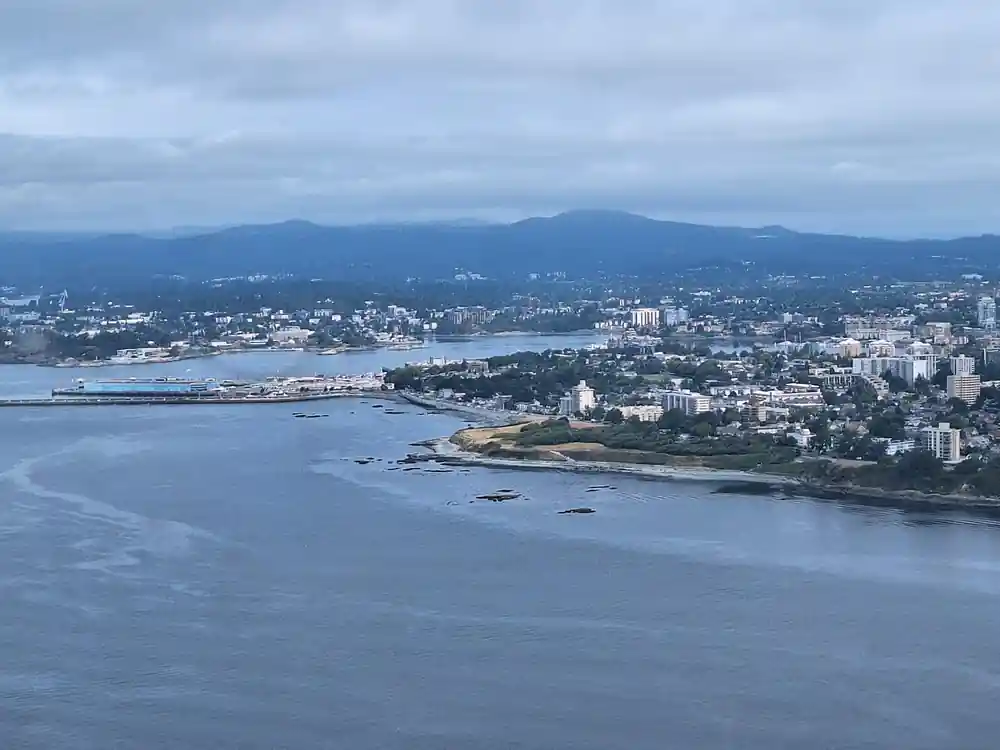
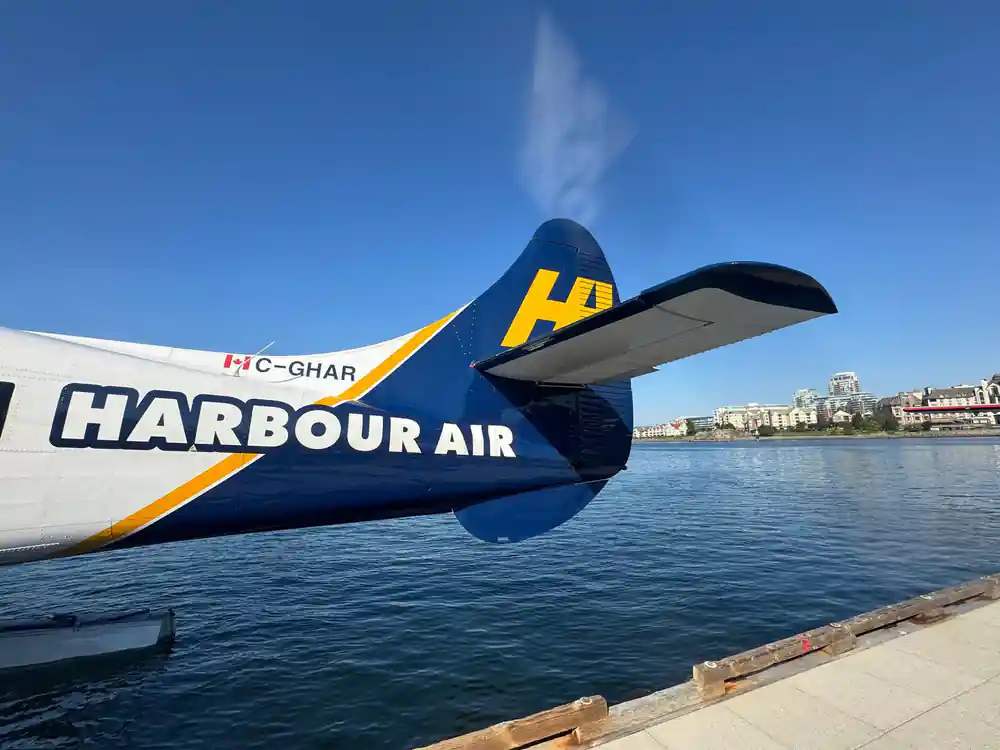
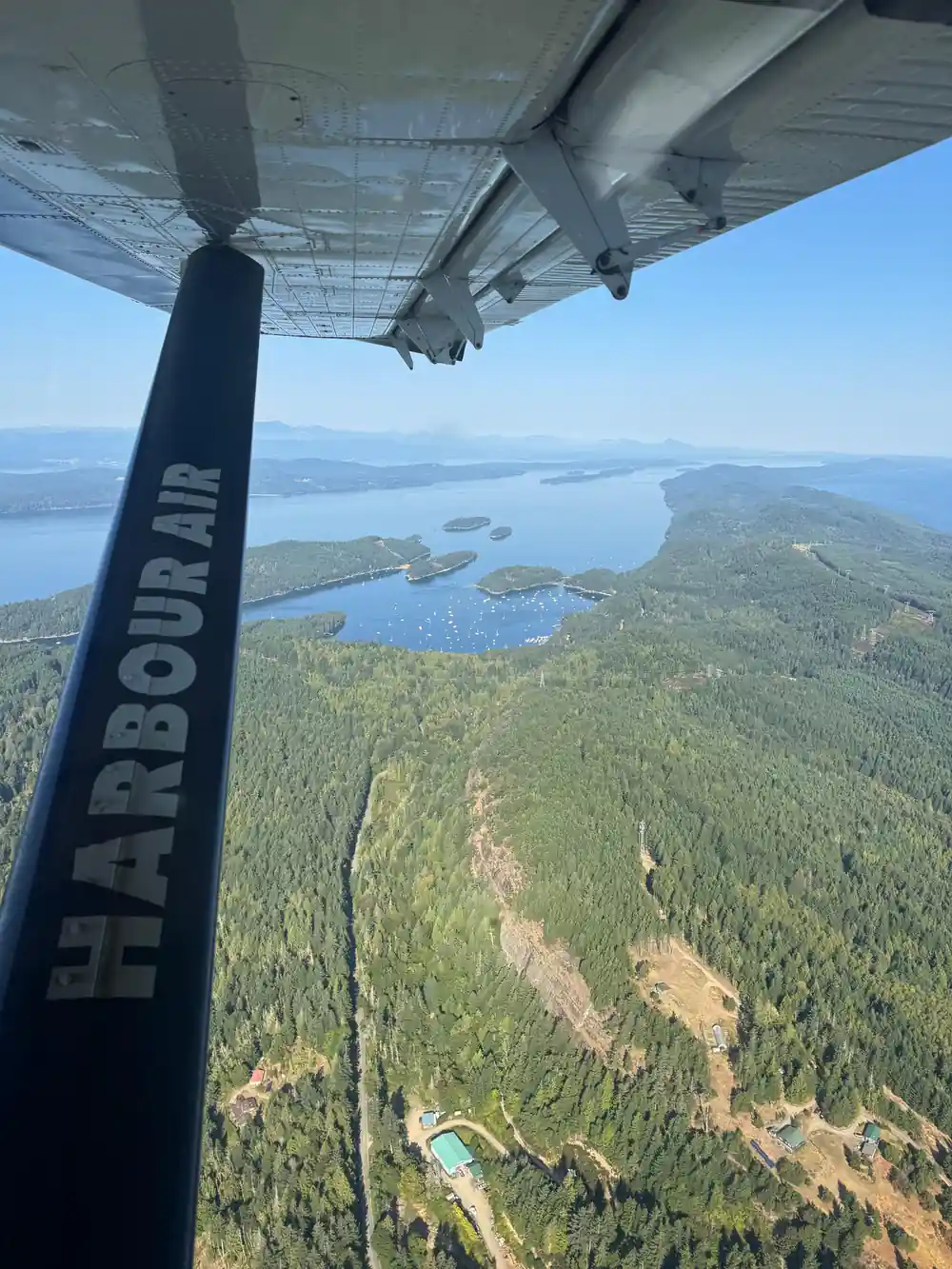
Water take-off, across the Strait of Georgia and the Gulf Islands, landing in the Inner Harbour.